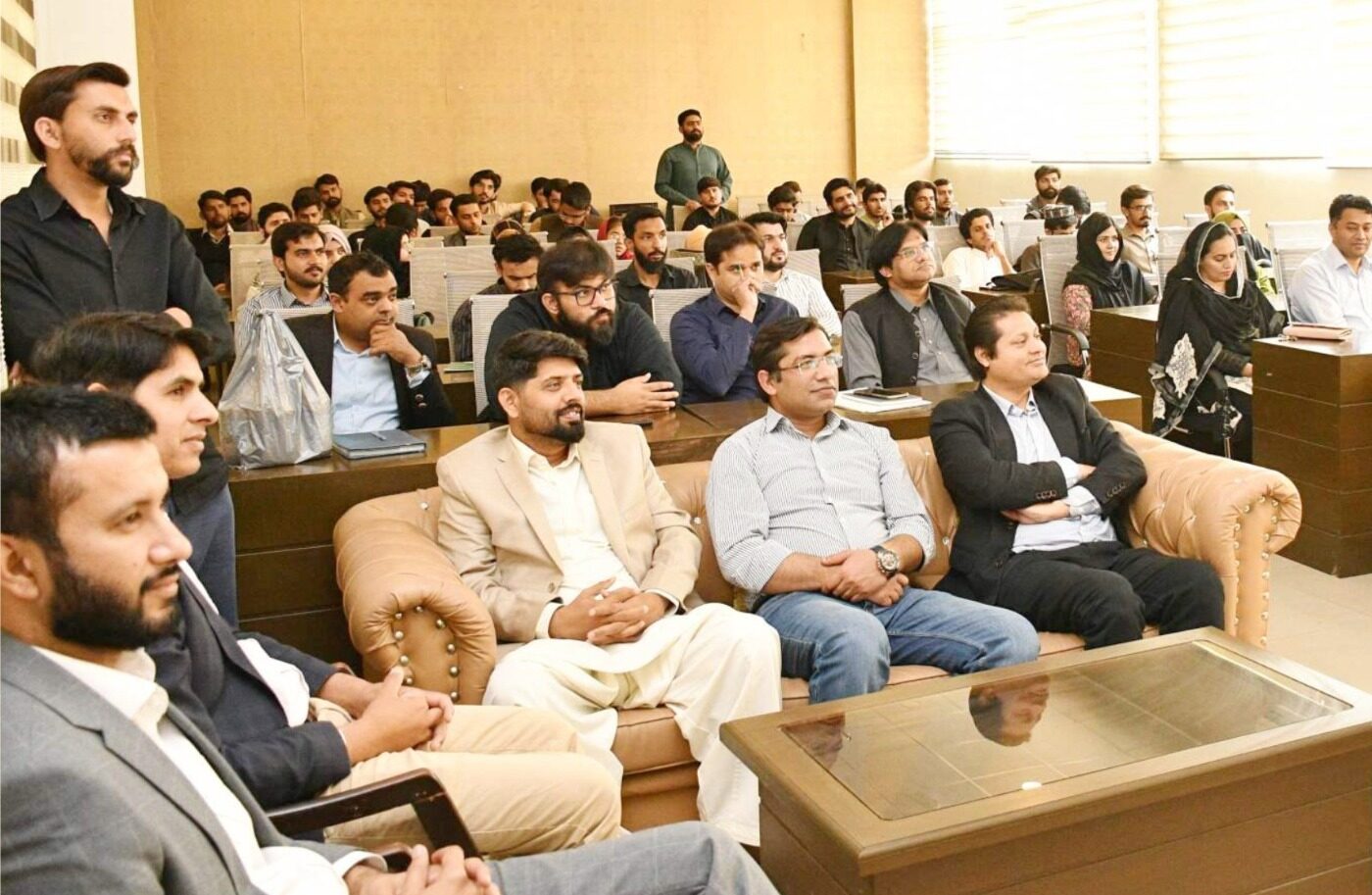
RAWALPINDI — Student-led research can play an important role in developing practical solutions for sustainable agriculture, Vice Chancellor of Pir Mehr Ali Shah Arid Agriculture University Rawalpindi (PMAS-AAUR) Prof. Dr. Qamar-uz-Zaman said at an international seminar on climate-smart irrigation and precision agriculture held at the university.
The event brought together researchers, faculty members and students to discuss new technologies and strategies aimed at improving water management and agricultural productivity in the face of climate change. The seminar focused on how scientific research and innovation can help address growing water scarcity challenges affecting Pakistan’s agriculture sector.

The seminar was organized by the Center for Precision Agriculture (C4PA) at PMAS-AAUR under the theme “Supplemental Irrigation through Decision Support System in the Face of Climate Change: A Sustainable Approach.”
Prof. Dr. Qamar-uz-Zaman said universities must play a proactive role in addressing agricultural challenges through research and innovation. He noted that research projects led by students can generate practical and innovative ideas that directly benefit farmers and strengthen academic learning.
He added that such initiatives contribute to improving farm productivity and support efforts to enhance food security in Pakistan.
Digital irrigation systems highlighted
The keynote address was delivered by Dr. Saad Javed Cheema, an agricultural engineer from the University of Prince Edward Island in Canada. He discussed the increasing use of digital irrigation monitoring systems in modern agriculture.
Dr. Cheema explained that technologies capable of measuring evapotranspiration and monitoring soil moisture in real time can help farmers schedule irrigation more efficiently. These systems enable farmers to apply water only when crops need it, improving water use efficiency and crop growth.
He noted that data-driven irrigation management can help conserve water resources while also improving crop resilience in areas affected by climate variability.
Advancing precision agriculture in Pakistan
Speakers at the seminar emphasized that precision agriculture technologies are becoming increasingly important as climate change places additional pressure on agricultural resources. These technologies integrate digital tools, sensors, satellite data and analytics to improve farm management decisions.
Participants said adopting such technologies can help farmers reduce input costs, improve resource efficiency and achieve more sustainable crop production.
Officials said the Center for Precision Agriculture at PMAS-AAUR continues to promote research, training and outreach activities aimed at introducing modern agricultural technologies and strengthening climate-resilient farming practices across Pakistan.