ISLAMABAD: The Federal Committee on Agriculture (FCA) has reviewed Pakistan’s agricultural performance and finalized key priorities for the Rabi 2026-27 season, with a focus on higher productivity, lower production costs, efficient water use and climate-resilient farming.
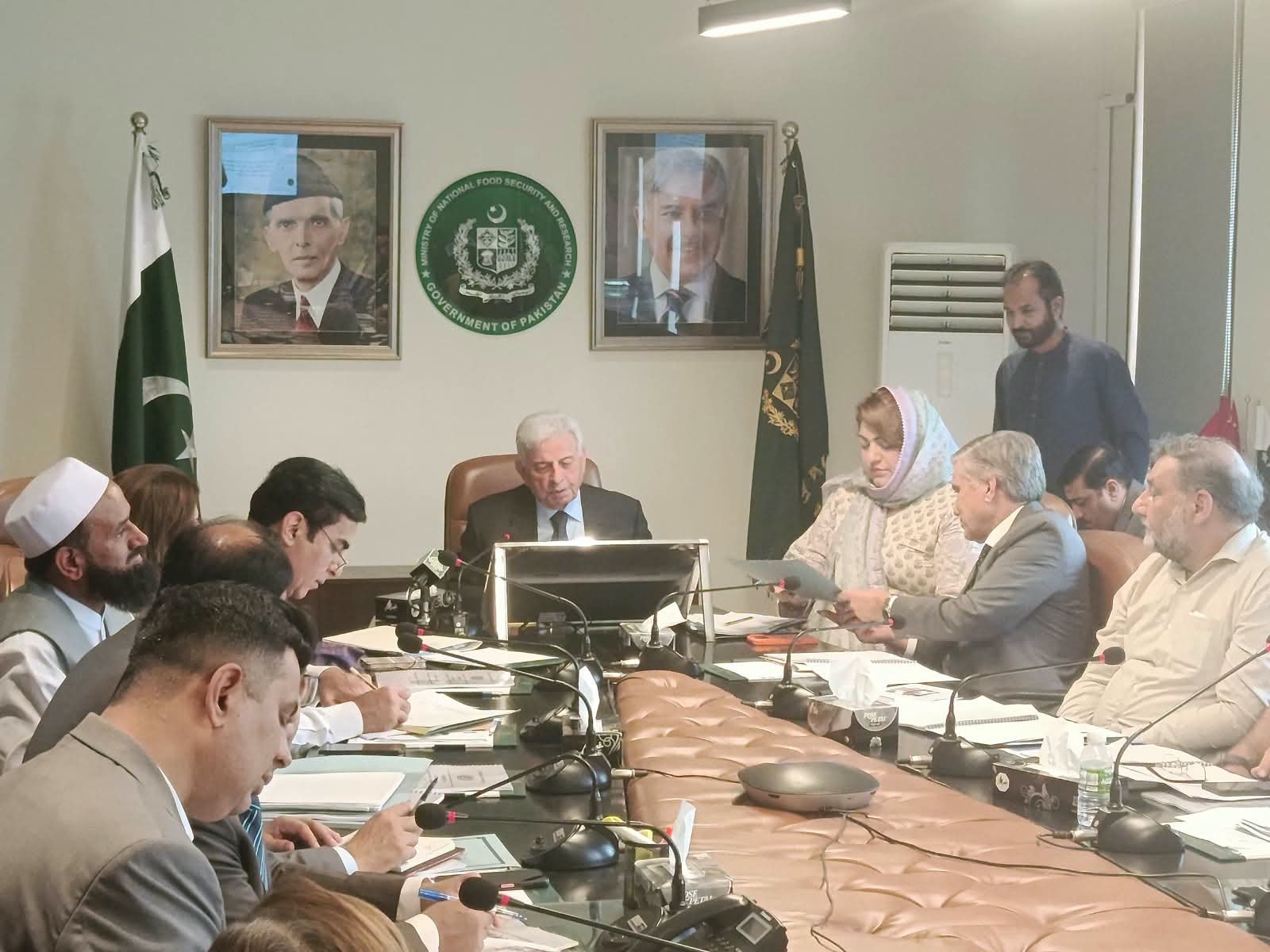
The 27th FCA meeting for the Rabi season was held on October 7, 2026, at the Pak Secretariat in Islamabad under the chairmanship of Federal Minister for National Food Security and Research Rana Tanveer Hussain.

The meeting was attended by representatives of provincial agriculture departments, State Bank of Pakistan, Zarai Taraqiati Bank Limited, Pakistan Meteorological Department, Indus River System Authority (IRSA), Pakistan Agricultural Research Council and other departments and institutions linked to the Ministry of National Food Security and Research.
Addressing the meeting, the federal minister said agriculture remains central to the country’s economy and food security. He stressed the need to promote climate-resilient seeds, mechanization, modern technologies, efficient use of water and agricultural inputs, and stronger market linkages.
The minister also highlighted the challenges faced by farmers because of rising input, energy and transportation costs. He said government measures were being taken to improve access to affordable inputs and support better returns for farmers.
The meeting was informed that the National Seed Policy, National Agricultural Biotechnology Policy and National Olive Policy had been approved. The government has also established the National Agri-Trade and Food Safety Authority to strengthen quality, food safety and export competitiveness.
The FCA reviewed the performance of seven Kharif crops during 2025-26. Five crops, including sugarcane, rice, maize, mungbean and chillies, recorded growth in production compared with the previous year.
Sugarcane production was provisionally estimated at 97.2 million tonnes from 1.358 million hectares. Rice production was estimated at 10.182 million tonnes from 3.902 million hectares, while maize production stood at around 9.97 million tonnes from 1.83 million hectares.
Mungbean production was estimated at 171,020 tonnes from 225,700 hectares. Chilli also recorded growth in area, production and yield compared with the previous year.
The committee said Rabi 2026-27 crop targets would be finalized after the announcement of the illustrative wheat price.
Officials reported that certified seed availability for Rabi crops is expected to remain satisfactory. However, water availability remains a key concern for the coming season.
According to the IRSA Advisory Committee assessment, based on rim-station inflows of 21.268 million acre-feet, an anticipated water shortage of around 22 percent is expected for Punjab and Sindh. The provinces have been allocated 29.18 MAF of water.
The Pakistan Meteorological Department warned that soil moisture stress could occur during September-November because of below-normal rainfall in recent months, including the monsoon season. However, conditions are expected to improve with mostly above-normal rainfall forecast for October and November.
The weather outlook also indicated that isolated rain and hail could damage standing Kharif crops, particularly in northwestern areas. While water availability is expected to improve in the upper half of the country, farmers in the lower half have been advised to use available irrigation water carefully for Rabi crops.
The meeting also reviewed agricultural financing. The State Bank of Pakistan had set an indicative agricultural credit target of Rs3,062 billion for FY2026, 19 percent higher than the previous year’s disbursement of Rs2,573 billion. During FY2026, agricultural lending institutions reportedly disbursed Rs3,231.6 billion.
Fertilizer availability was also discussed. Total urea availability for 2026-27 is estimated at 3.95 million tonnes, including 765,000 tonnes of opening stock and 3.185 million tonnes of domestic production, against expected offtake of 3.596 million tonnes.
DAP availability is estimated at 766,000 tonnes, compared with expected demand of 838,000 tonnes. The anticipated shortfall is expected to be met through private-sector imports.
The federal minister called for stronger agricultural extension and advisory services so farmers can receive timely information about modern technologies, climate-resilient practices and improved farming methods.
The committee emphasized coordinated action by federal and provincial governments, research institutions, academia, the private sector and farmers to strengthen agricultural productivity, reduce production costs and improve Pakistan’s long-term food and water security.