By: Rizwan Tahir Chohan
ISLAMABAD: Experts at a policy seminar in Islamabad have urged Pakistan and India to establish a joint Indo-Gangetic Airshed Management Forum and enhance regional data-sharing mechanisms to tackle worsening air pollution, warning that isolated national efforts are insufficient to address transboundary smog affecting major cities across the region.

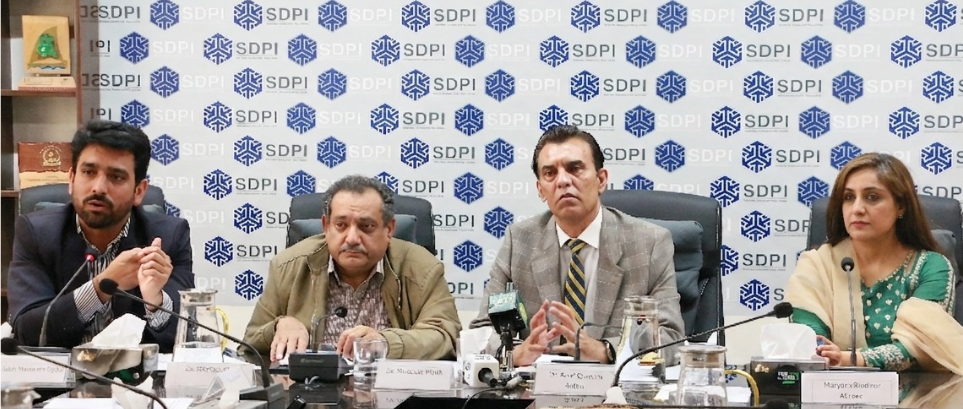
The seminar, titled “Outlook of Air Quality in Pakistan: Challenges and the Way Forward,” was organized by the Sustainable Development Policy Institute (SDPI) on Wednesday.
Speakers highlighted that deteriorating air quality is not only reducing life expectancy but also harming the economy, placing Pakistan among the world’s most polluted countries. They stressed the need for stronger governance reforms, regional cooperation, expanded monitoring systems and clean transport solutions.
Dr. Abid Qaiyum Suleri, Executive Director of SDPI, said air pollution has cut the average life expectancy of Pakistanis by about four years, while residents of Lahore have lost nearly seven years due to poor air quality.
He noted that transport emissions account for around 35 percent of pollution in Lahore, followed by industry and brick kilns, while cities like Karachi and Islamabad face their own pollution sources, including industrial activity, congestion and dust.
Dr. Suleri emphasized that crop burning is not the main year-round contributor, pointing instead to continuous emissions from transport and industry. He added that countries like Bangladesh and China have made significant progress in improving air quality, offering valuable lessons for Pakistan.
Dr. Shafqat Munir, Deputy Executive Director of SDPI, described air pollution as Pakistan’s “fifth season,” typically lasting from October to January and causing widespread health issues. He said pollution leads to long-term economic losses through healthcare costs, reduced productivity and lower agricultural output.
He called for joint airshed management plans within Pakistan and across borders, along with the promotion of renewable energy, better monitoring systems, public awareness campaigns and sustainable agricultural practices.
Experts also stressed the importance of synchronized monitoring, data transparency and scientific cooperation, particularly in shared pollution corridors such as the Lahore–Delhi region.
Dr. Jabir Hussain Syed of COMSATS University Islamabad highlighted the need for stronger collaboration between academia and policymakers and improved monitoring infrastructure. He pointed to China’s success in reducing pollution through coordinated governance and extensive monitoring systems.
Meanwhile, Maryam Shabbir Abbasi of SDPI noted that Pakistan remains among the most polluted countries, with PM2.5 levels far exceeding World Health Organization guidelines. She said data gaps and weak monitoring systems continue to hinder effective policymaking.
Participants agreed that addressing Pakistan’s air pollution crisis requires coordinated regional action, stronger environmental governance and the adoption of cleaner technologies across key sectors.