
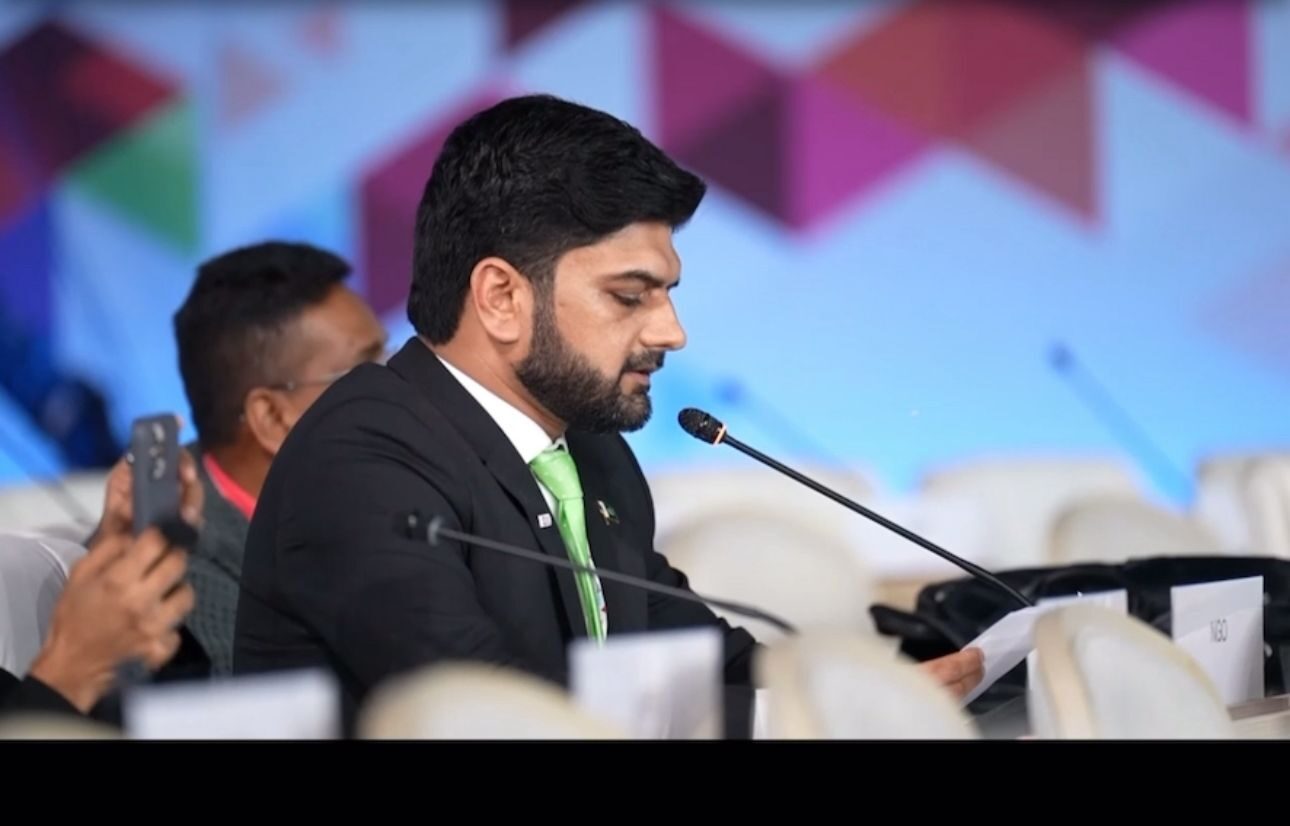
Islamabad — Civil society representatives from Pakistan highlighted the country’s ongoing anti-corruption reforms at the Eleventh Conference of the States Parties (CoSP) to the United Nations Convention against Corruption (UNCAC), currently under way in Doha.
Speaking on behalf of the Sustainable Social Development Organization (SSDO), Syed Kausar Abbas represented Pakistan’s civil society at the conference, which has brought together more than 190 state parties along with international organizations and civil society representatives. Abbas delivered a formal civil society statement during the proceedings.
Anti-corruption reforms outlined at UNCAC forum

Abbas said Pakistan has undertaken a series of reforms over recent years to address corruption as a governance challenge. These include changes to accountability laws, the implementation of Right to Information (RTI) legislation at federal and provincial levels, and the introduction of whistleblower protection frameworks.
He also referred to institutional measures aimed at strengthening the National Accountability Bureau, provincial anti-corruption establishments, and the creation of integrity committees and management cells within public sector institutions.
Digitization linked to transparency and accountability
Highlighting progress in digital governance, Abbas pointed to reforms in areas such as social protection programmes, land record management, asset recovery, political finance tracking, licensing systems, and grievance redressal mechanisms.
He said digitization initiatives have reduced discretionary powers within public administration and improved transparency and accountability. Proactive disclosure of information, he added, has contributed to better service delivery and increased public trust.
Civil society role in anti-corruption reforms
Abbas emphasized the role of civil society organizations in supporting anti-corruption reforms through advocacy, research, and public awareness. He noted that civil society has promoted the digitization of public institutions and the effective functioning of RTI commissions to ensure timely access to information.
According to him, civil society groups have also used RTI laws to identify governance gaps and support evidence-based policymaking. Capacity-building initiatives for parliamentarians, public officials, and citizens on transparency, public expenditure oversight, and budget tracking were also highlighted.
Call for sustained collaboration
Looking ahead, Abbas stressed the need for continued cooperation between government institutions and civil society. He called for structured engagement platforms, expanded digital transparency initiatives, and stronger links between UNCAC review recommendations and national and sub-national implementation strategies.
He said civil society remains committed to working with the Government of Pakistan, the United Nations Office on Drugs and Crime (UNODC), and international partners to support governance reforms.
Read related news here: https://greenpost.com.pk/pakistan/
For more stories and insights, visit The Public Purview



2 Comments on “Civil Society Highlights Pakistan’s Anti-Corruption Reforms at UNCAC Conference in Doha”