ISLAMABAD: Mac users appear to be falling behind Windows users in several basic cybersecurity practices, with a higher proportion reporting malware infections, online scams and personal data theft, according to a new Kaspersky survey.
The findings showed that 12% of macOS users said they had been affected by malware over the past year, compared with 9% of Windows users.

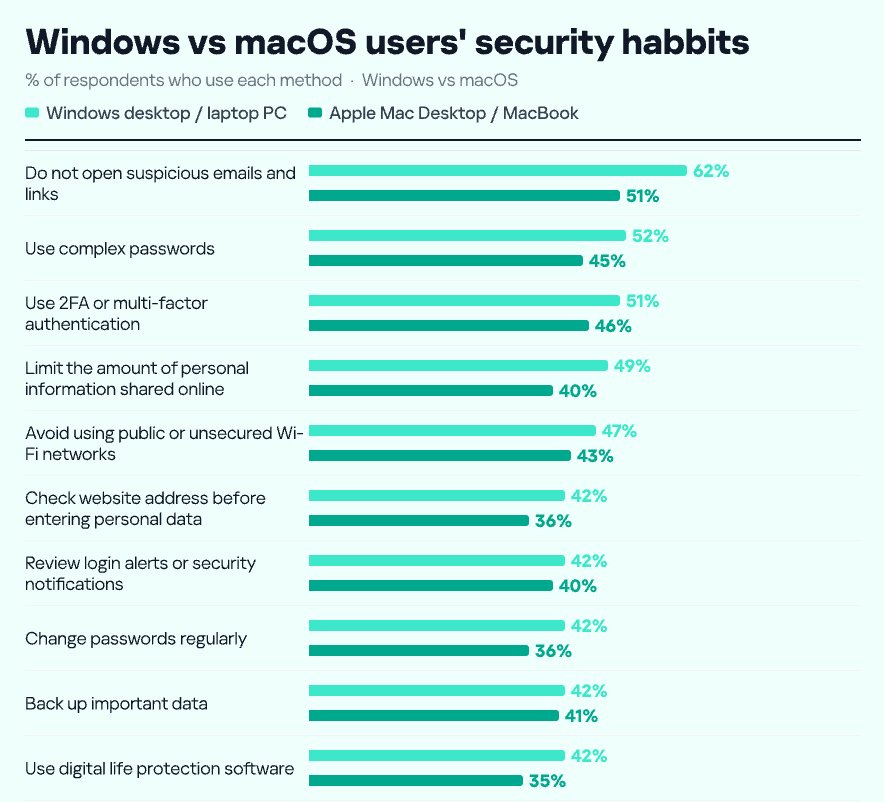
The survey also found a gap in the use of dedicated cybersecurity software. Around 35% of Mac users said they used security software, compared with 42% of Windows users.
One of the widest differences emerged in how users respond to suspicious emails and links. According to Kaspersky, 62% of Windows users said they avoid opening suspicious messages or links, compared with 51% of macOS users.
Mac users report more online scams
The survey suggested that Mac users were also more likely to report several forms of online fraud and privacy-related incidents.
Online scams and investment fraud affected 16% of macOS users, compared with 13% of Windows users, while privacy violations were reported by 11% of Mac users and 8% of Windows users.
Personal data theft showed an even wider gap, affecting 12% of macOS users compared with 7% of Windows users, according to the findings.
Kaspersky said the results challenge the widespread perception that Mac devices require less cybersecurity protection because of built-in security features or their historically smaller share of the global computer market.
Windows users show stronger password habits
Windows users also performed slightly better in several password and account-security practices.
The survey found that 38% of Windows users said they use a unique password for every account, compared with 35% of Mac users.
About 52% of Windows users reported using complex passwords, compared with 45% of macOS users.
The use of two-factor or multi-factor authentication was also higher among Windows users, at 51%, compared with 46% among Mac users.
Cybersecurity specialists generally recommend using unique passwords, multi-factor authentication and caution when handling unexpected emails, links and attachments to reduce exposure to phishing, credential theft and other online threats.
Cyber threats increasingly target all platforms
Sergey Puzan, a cybersecurity expert at Kaspersky, said perceptions that macOS is inherently safer can lead some users to underestimate current risks.
He said cybercriminals increasingly rely on phishing, supply-chain attacks and other techniques that can affect users regardless of their operating system.
Mac-specific malware also remains a threat, he said, with some malware families developed specifically to target Apple computers.
Puzan said any internet-connected device can face cybersecurity risks and users should adopt protective measures regardless of whether they use macOS, Windows or another operating system.
The survey findings underline the growing importance of basic digital-security habits as phishing, online fraud, account compromise and data theft become increasingly platform-independent threats.