Monitoring Report
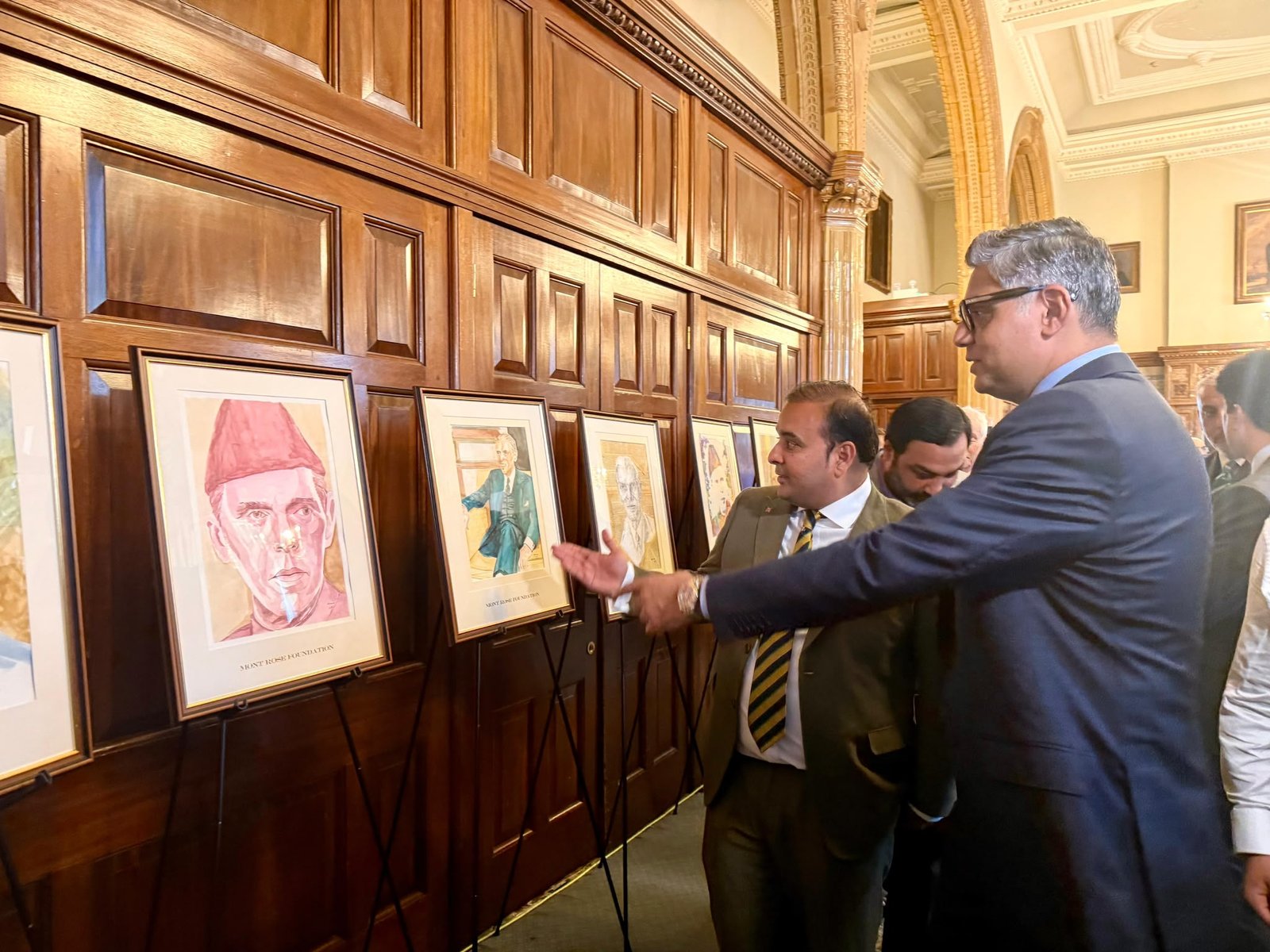
LONDON: Quaid-e-Azam Muhammad Ali Jinnah’s political legacy, constitutional struggle and vision for Pakistan came into focus at a major exhibition in central London, where speakers highlighted the continuing relevance of his principles for Pakistan and the global Pakistani diaspora.

The exhibition, titled “Quaid-e-Azam Muhammad Ali Jinnah: A Legacy Beyond Time,” was organised by the Mont Rose Foundation at the National Liberal Club on Whitehall Place.
Pakistan’s High Commissioner to the United Kingdom, Tipu Usman, British-Pakistani entrepreneur and educationist Bilal Sheikh, artist Amera Rashid, academics, business leaders and prominent members of the British-Pakistani community attended the event.
Jinnah’s Principles Remain Relevant, High Commissioner Says
Addressing the gathering, High Commissioner Tipu Usman said Jinnah firmly believed in the rule of law, reasoned argument, dialogue and political negotiation, even in the face of sharp political differences.
He said Jinnah’s legacy should not be viewed solely through the struggle that led to the creation of Pakistan, but also through the principles and values that shaped that struggle.
The High Commissioner also appreciated Bilal Sheikh, CEO of the Mont Rose Foundation, for organising the exhibition and for previously commissioning a portrait of Quaid-e-Azam that is permanently displayed at the National Liberal Club.
Exhibition Highlights Jinnah’s Political Legacy
Bilal Sheikh, founder of Mont Rose College in London, said Pakistan’s creation was the result of Jinnah’s constitutional struggle, political determination and commitment to securing a future in which the Muslims of British India could determine their own political, economic and social destiny.
He said Jinnah’s message remained relevant more than seven decades after independence, particularly as Pakistan’s role and profile on the international stage continued to evolve.
“Jinnah did not simply campaign for a piece of territory. He fought for the political rights, dignity and future of millions of people,” Sheikh said.
He added that Pakistan’s population of nearly 250 million today reflected the scale of the political achievement made possible by Jinnah’s leadership and foresight.
Referring to Pakistan’s recent regional and diplomatic role, Sheikh said the country’s emphasis on peace, stability and national resilience drew inspiration from the principles associated with its founding leader.
British Pakistanis Part of Modern Britain’s Success Story
Sheikh also highlighted the contribution of British Pakistanis to the United Kingdom, saying the community had established a strong presence across education, healthcare, law, business, public service and technology.
“British Pakistanis are part of the success story of modern Britain,” he said, adding that contributing to Britain while maintaining a role in Pakistan’s development was consistent with Jinnah’s emphasis on responsibility, education and progress.
Campaign for Greater Recognition of Jinnah in Britain
Sheikh has for several years campaigned for greater recognition of Jinnah’s historical links with Britain.
In 2022, he commissioned a portrait of Jinnah for the National Liberal Club, where Pakistan’s founder had been a member more than a century ago.
He has also advocated for a statue of Jinnah in Parliament Square, arguing that the statesman’s ties with Britain and his political legacy deserve greater public recognition.
The London exhibition brought together members of the Pakistani diaspora and British institutions in an effort to revisit Jinnah’s political thought and highlight his enduring place in Pakistan’s national identity.