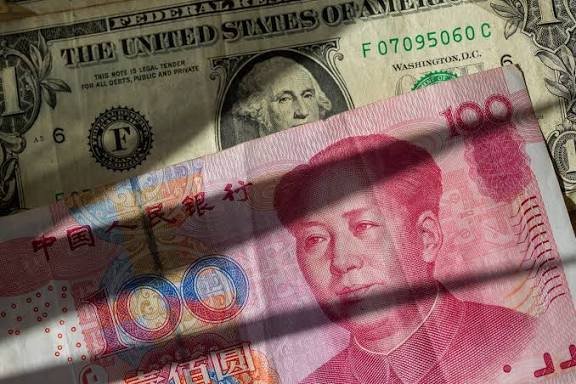
Islamabad Nov 20,2026: Higher interest rates on US dollar deposits offered by Chinese banks could encourage exporters and businesses to retain more of their foreign-currency earnings, potentially easing appreciation pressure on the yuan and helping manufacturers maintain their competitiveness in international markets.
The development comes as the yuan has strengthened by approximately 10% against the US dollar since early 2025, reaching a four-year high of 6.6449 per dollar last week.

According to a media report, more than six Chinese state-owned, joint-stock and foreign banks have recently increased interest rates on dollar deposits, with some offers exceeding 4% and one reaching 4.5% in late October.
The higher returns provide an incentive for businesses and households to retain dollar holdings rather than immediately converting them into yuan, potentially moderating demand for the Chinese currency.
At one state-owned bank, dollar deposit rates increased by approximately 80 basis points over recent months, reaching as high as 4.5% in late October. Another state-owned bank raised its one-year dollar deposit rates to above 4% for balances exceeding $50,000, according to people familiar with the offers cited by media.
Foreign-currency deposits in China reached a record $1.2 trillion at the end of September, an increase of 17.7% year-on-year, according to the People’s Bank of China data cited in the report.
The figures highlight the substantial volume of foreign-currency holdings in China’s banking system and the potential importance of deposit pricing in influencing how businesses manage their overseas earnings.
Jalal Zafar, Assistant Director at the State Bank of Pakistan (SBP), Karachi, told Wealth Pakistan that higher returns on dollar deposits could encourage Chinese households and businesses to retain their foreign-currency holdings, helping moderate appreciation pressure on the yuan.
He explained that exporters receiving payments in dollars could benefit from greater flexibility in deciding when to convert their earnings into local currency.
According to Zafar, this flexibility could help Chinese businesses manage international payments, maintain cash flows and reduce exposure to sudden exchange-rate movements.
He said a gradual and stable exchange-rate adjustment would also help Chinese manufacturers manage export revenues, plan international transactions and maintain their pricing competitiveness in global markets.
China’s extensive manufacturing base and deep integration into international supply chains made effective foreign-exchange management particularly important for supporting trade activities and sustaining export performance, he added.
Zafar also highlighted the importance of diversifying international payment arrangements, reserve management strategies and financial channels to strengthen China’s resilience to external financial developments.
A stronger yuan presents a specific challenge for export-oriented businesses, as it reduces the local-currency value of their dollar-denominated export earnings.
For companies operating on narrow margins, exchange-rate movements can influence pricing decisions, profitability and the timing of foreign-currency conversions.
Higher dollar deposit rates give exporters an added incentive to hold onto their foreign-currency earnings, particularly if they have upcoming dollar expenses.
However, the extent to which such deposits influence exchange-rate movements depends on broader market conditions, including capital flows, interest-rate differentials and demand for the yuan.
Aaqib Qayyum, a Research Associate at the World Bank Group, told Wealth Pakistan that China’s approach reflected the importance of maintaining a stable and predictable exchange-rate environment for a large export-oriented economy.
He said the Chinese banking system was playing an important role in helping businesses manage foreign-exchange earnings and respond to changing international financial conditions.
According to Qayyum, encouraging exporters to retain dollar earnings could ease immediate conversion pressure on the yuan, giving Chinese businesses greater flexibility to manage cash flows, international payments and export-related financial commitments.
He said a more balanced exchange-rate environment could support the competitiveness of Chinese manufacturers in international markets.
Qayyum added that China’s ability to coordinate its financial system with the needs of its manufacturing and export sectors demonstrated the importance of a supportive financial environment for sustaining international trade and economic growth.
The implications of higher dollar deposit rates extend beyond individual exporters because foreign-currency management is an important component of international trade financing.
Businesses engaged in cross-border transactions often maintain foreign-currency balances to meet payment obligations, purchase imported inputs and manage fluctuations in exchange rates.
More attractive deposit returns can influence how these balances are held and managed, although the benefits depend on individual companies’ financing requirements and exposure to currency movements.
For Pakistan and other trading partners, developments in China’s foreign-exchange market are significant because of the country’s central role in global manufacturing and international supply chains.
Greater stability in the yuan could help businesses plan procurement, manage import payments and maintain predictable commercial arrangements with Chinese suppliers.
For Pakistani importers sourcing machinery, industrial inputs and other products from China, exchange-rate stability can be an important consideration in negotiating contracts and managing payment schedules.
At the same time, fluctuations in the yuan and dollar can affect the relative costs of imports and shape how businesses plan for bilateral trade.
Financial experts emphasised that higher dollar deposit rates could provide Chinese exporters with greater flexibility in managing foreign-currency earnings, but their wider impact would depend on exchange-rate trends and market conditions.
The recent increases in deposit rates therefore offer a potential mechanism for moderating yuan appreciation pressure while supporting more flexible foreign-currency management among businesses.
Their effectiveness in sustaining export competitiveness will ultimately depend on how businesses respond to the higher returns and how broader financial and trade conditions influence the Chinese currency.