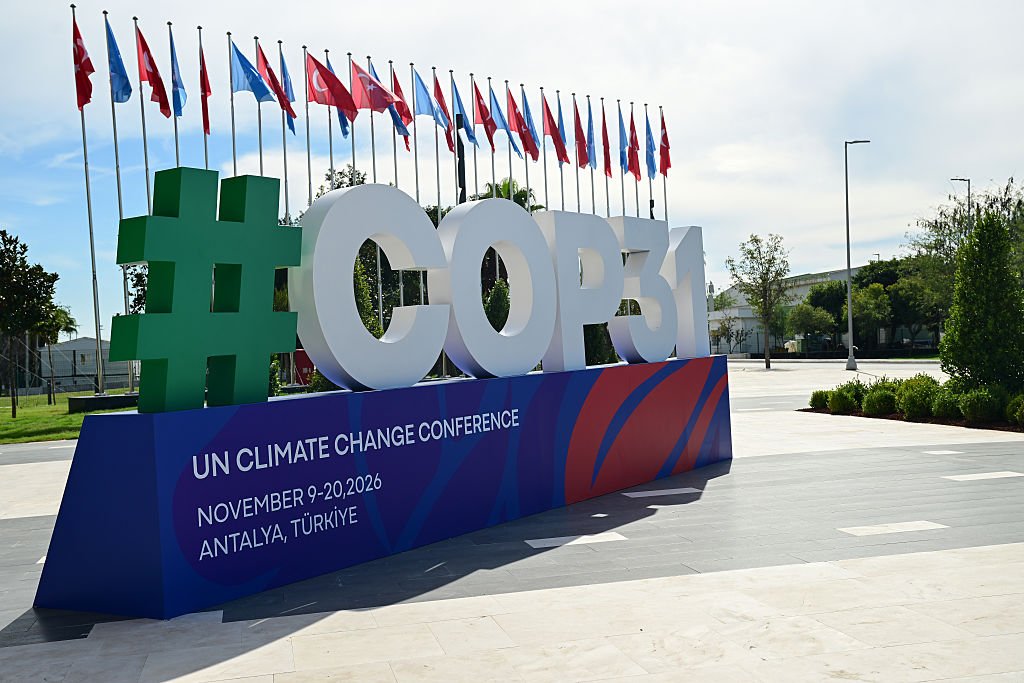
Islamabad, Nov 06,2026: Accelerating the global transition away from fossil fuels will require practical strategies for economic diversification, workforce development and clean energy investment, as governments prepare to address the financial and social challenges of the transition at COP31.
The climate summit, scheduled for November 9–20 in Antalya, Türkiye, is expected to bring renewed attention to implementing national emissions reduction commitments while ensuring that countries and communities dependent on coal, oil and gas can adapt to changing energy systems.

The European Union’s formal negotiating position calls for faster implementation of national climate commitments, an accelerated transition away from fossil fuels in a “just, orderly and equitable” manner and wider electrification using clean power. It also supports strengthening the UN Mitigation Work Programme.
On financing, EU conclusions adopted ahead of the summit reaffirm the goal agreed at COP29 in Baku to mobilise at least $300 billion annually for developing countries by 2035, with developed countries taking the lead, while emphasising the need for greater public, private and concessional financing.
Against this backdrop, experts say the transition will require different approaches across countries and regions because economic dependence on fossil fuels varies considerably, affecting employment, government revenues and opportunities for industrial development.
Dr Sandeep Pai, Senior Lead for International Energy Transitions and Executive in Residence at Duke University’s Nicholas Institute for Energy, Environment & Sustainability, told Wealth Pakistan that just-transition policies would need to be designed primarily at national and regional levels rather than through a single global framework.
He explained that coal-dependent regions faced particularly concentrated employment challenges, while economies dependent on oil and gas could be more exposed to declining government revenues and fiscal pressures.
“If it is about job creation, each of these regions will have to have an economic-diversification-focused policy,” Pai said.
Coal-producing regions with mines and power stations would therefore need economic diversification strategies that created alternative industries and employment opportunities before existing assets closed, he explained.
For economies dependent on oil and gas revenues, the challenge could instead involve managing potential fiscal losses while investing existing revenues in longer-term economic diversification.
Pai said clean-energy investment could contribute to a just transition, but renewable energy projects alone would not necessarily replace the economic activity lost in regions dependent on fossil fuels.
He noted that new clean-energy investments might be concentrated in different locations from existing coal, oil and gas industries, making broader industrial development and supply-chain diversification important for affected communities.
International finance could play a constructive role by reducing investment risks while supporting worker retraining, local economic diversification and transition planning, he added.
For developing economies such as Pakistan, access to affordable climate financing will be particularly important as governments pursue emissions reductions while also addressing adaptation needs and climate-related losses.
Dr Omais Abdur Rehman, Senior Associate in Renewable Energy Technologies at Renewables First and Lead Coordinator for the Pakistan Renewable Energy Coalition, told Wealth Pakistan that climate finance should address both the cost of transitioning to cleaner energy and the growing economic burden of climate impacts.
He said greater reliance on grants and highly concessional financing instruments was important for countries already facing debt and fiscal pressures, particularly for adaptation and resilience projects that might not generate conventional commercial returns.
Rehman also emphasised the need for clearer rules governing climate-finance commitments, including eligibility criteria, disbursement procedures and accountability mechanisms, to ensure that announced financial support translated into actual funding.
Pakistan’s latest Nationally Determined Contribution (NDC 3.0) illustrates the scale of the financing challenge and the opportunities associated with the transition.
The country has set an indicative target of reducing greenhouse gas emissions by up to 50% below the projected 2035 baseline, comprising an unconditional reduction of 17 percentage points and a further 33 percentage points conditional on international finance, technology transfer and capacity-building support.
Rehman said Pakistan also needed to strengthen its domestic readiness to attract and utilise international climate financing effectively.
He highlighted the importance of improving financial regulations, project preparation and institutional capacity while translating priorities in energy, transport, agriculture and other sectors into credible, finance-ready programmes.
Emerging developments in solar power, battery storage and electric mobility could create opportunities for transition financing, provided they were supported by coherent policies and commercially viable investment programmes, he added.
Experts believe that effective implementation of fossil-fuel transition commitments will depend on combining faster emissions reductions with policies that protect affected workers, support economic diversification and expand access to affordable financing.
COP31 therefore offers an opportunity to move beyond broad commitments towards practical implementation, with national transition strategies and international financial cooperation playing important roles in shaping the next phase of global climate action.
For developing economies such as Pakistan, progress on these fronts could help strengthen energy security, attract clean-energy investment and create sustainable economic opportunities while supporting national and international climate objectives.