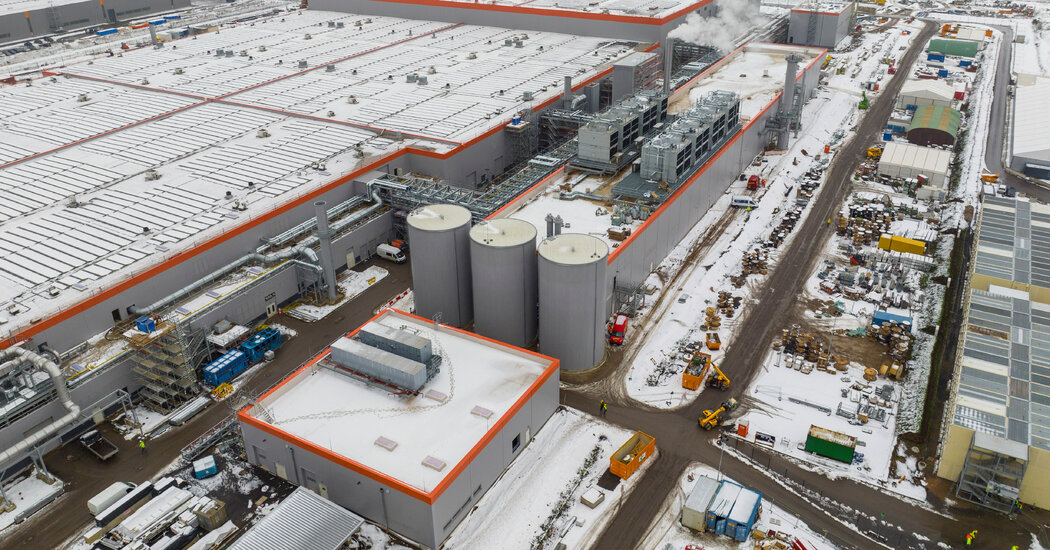
ISLAMABAD, May 13 (ABC): A planned Chinese battery plant in Faisalabad is expected to expand Pakistan’s local energy storage and battery manufacturing capacity as demand rises for electric vehicles (EVs) and solar power systems. Chinese company Dongjin Group has announced a $15 million investment to establish a dry battery manufacturing facility in Allama Iqbal Industrial City, a Special Economic Zone developed under the China-Pakistan Economic Corridor (CPEC).
The project reflects broader efforts to strengthen domestic industrial production and reduce reliance on imported batteries and energy technologies.
What is the project?

Talking to Wealth Pakistan,Dongjin Group plans to build a dry battery manufacturing facility near Faisalabad in Punjab. The investment agreement was signed with the Punjab Board of Investment and Trade (PBIT).
According to PBIT officials, the company identified Pakistan as a growing market for batteries because of increasing adoption of electric vehicles and solar energy systems. Batteries are a key component in both sectors, storing electricity for transportation and backup power use.
The facility will be located in Allama Iqbal Industrial City, one of Pakistan’s designated Special Economic Zones. These zones are designed to attract industrial investment through tax incentives, infrastructure, and simplified business regulations.
Why does battery manufacturing matter in Pakistan?
Pakistan’s demand for batteries has increased alongside the expansion of solar installations and interest in electric mobility. Solar systems commonly use battery storage to manage electricity supply, while EVs depend on rechargeable battery technology for operation.
Industry stakeholders say local manufacturing could help reduce dependence on imported batteries and related equipment. Pakistan currently imports a significant share of its energy storage products, including lithium-ion batteries used in EVs and renewable energy systems.
Former Engineering Development Board chairman Almas Hyder said battery production has become strategically important worldwide because of its role in renewable energy, transportation, and electricity grid stability.
He also said Pakistan is moving toward localized lithium-ion battery manufacturing as part of broader efforts to improve energy security and support industrial development.
What incentives are being offered?
Under Pakistan’s Special Economic Zone framework, Dongjin Group will qualify for several investment incentives.
These include:
- A 10-year income tax exemption
- A one-time exemption from customs duties and taxes on imported plant and machinery
Officials say these incentives are intended to encourage foreign direct investment and support advanced manufacturing projects in Pakistan.
Which industries could be affected?
The battery plant could support multiple related industries beyond energy storage.
According to PBIT, sectors that may benefit include:
- Electronics manufacturing
- Automotive components
- Packaging
- Chemical production
- Engineering and industrial support services
The project is also expected to create employment opportunities in Faisalabad and nearby areas during both construction and operational phases.
What policy changes are shaping the sector?
Pakistan recently introduced the Battery Manufacturing Policy 2026–31, which aims to encourage domestic battery production and attract private-sector investment.
The policy is part of wider efforts to support renewable energy adoption, electric vehicle infrastructure, and industrial localization. Analysts say local manufacturing capacity could become increasingly important as Pakistan’s energy and transport sectors evolve.
Battery production is also linked to broader energy policy goals, including reducing reliance on imported fossil fuels and improving long-term energy resilience.
What happens next?
The project is currently at the investment and planning stage. Further developments are expected to include facility construction, equipment imports, and operational setup within Allama Iqbal Industrial City.
Officials from the Punjab Board of Investment and Trade say they will continue supporting the investment process as the project moves forward.