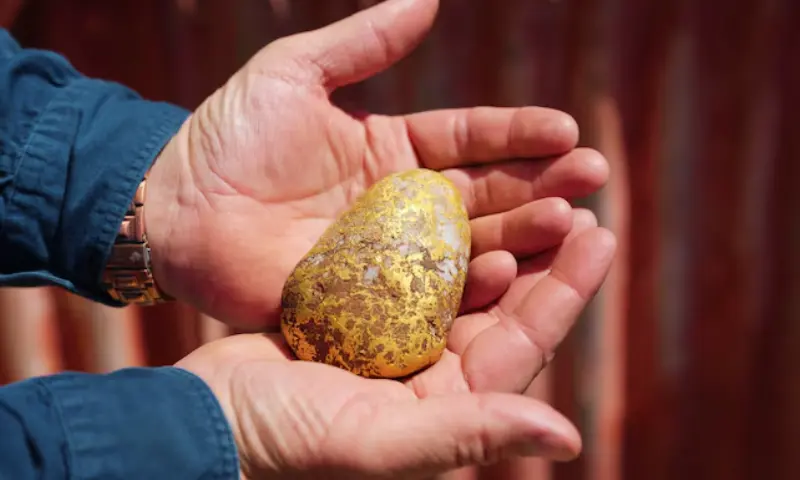
SYDNEY: An amateur gold prospector in Australia has discovered an exceptionally large gold nugget weighing more than 1.2 kilograms, with an estimated market value exceeding $150,000. The rare find was made near Tibooburra in the northwestern region of New South Wales, attracting attention from gold enthusiasts and prospectors.
According to Australian media reports, the nugget was discovered at Mount Stuart Station, where the man was searching for precious metals using a metal detector. Tests revealed that the specimen weighs more than 1,200 grams and contains approximately 940 grams of pure gold, alongside quartz fragments.
A Lucky Discovery After Days of Searching

The prospector said that gold hunting often involves digging up ordinary discarded objects, including old nails, horseshoes and metal fragments. This time, however, a signal from his metal detector encouraged him to dig further.
During one of his first attempts to remove the soil, he noticed a bright yellow spot in the centre of the hole. After uncovering the object, he hoped it was genuine gold rather than a piece of rock with a golden appearance.
The discovery was later confirmed to be a substantial gold specimen. Its potato-like shape earned it the nickname “Tibooburra Spud,” inspired by the area where it was found.
How Much Is the Nugget Worth?
The nugget’s estimated value based on its gold content is between $150,000 and $160,000, according to the report. However, its unusual size and rarity could make it more valuable to collectors, with a potential selling price of up to $200,000.
The final price would depend on the buyer, the gold market and the specimen’s appeal as a collectible.
Why Is the Find So Rare?
Greg Spangler, a gold-prospecting equipment seller based in Broken Hill, said discoveries of gold nuggets weighing more than one kilogram are extremely uncommon. In more than two decades of experience, he had encountered very few comparable finds.
Most people searching for gold typically recover small flakes or nuggets rather than specimens of this size.
Gold prospecting around Tibooburra dates back to the late 1880s, and the region continues to attract visitors interested in searching for precious metals. However, prospecting is restricted in certain areas, while some stations allow it for a fee.
The discovery highlights the rarity of finding such a large natural gold specimen and demonstrates why prospecting continues to attract enthusiasts despite the frequent lack of valuable finds.