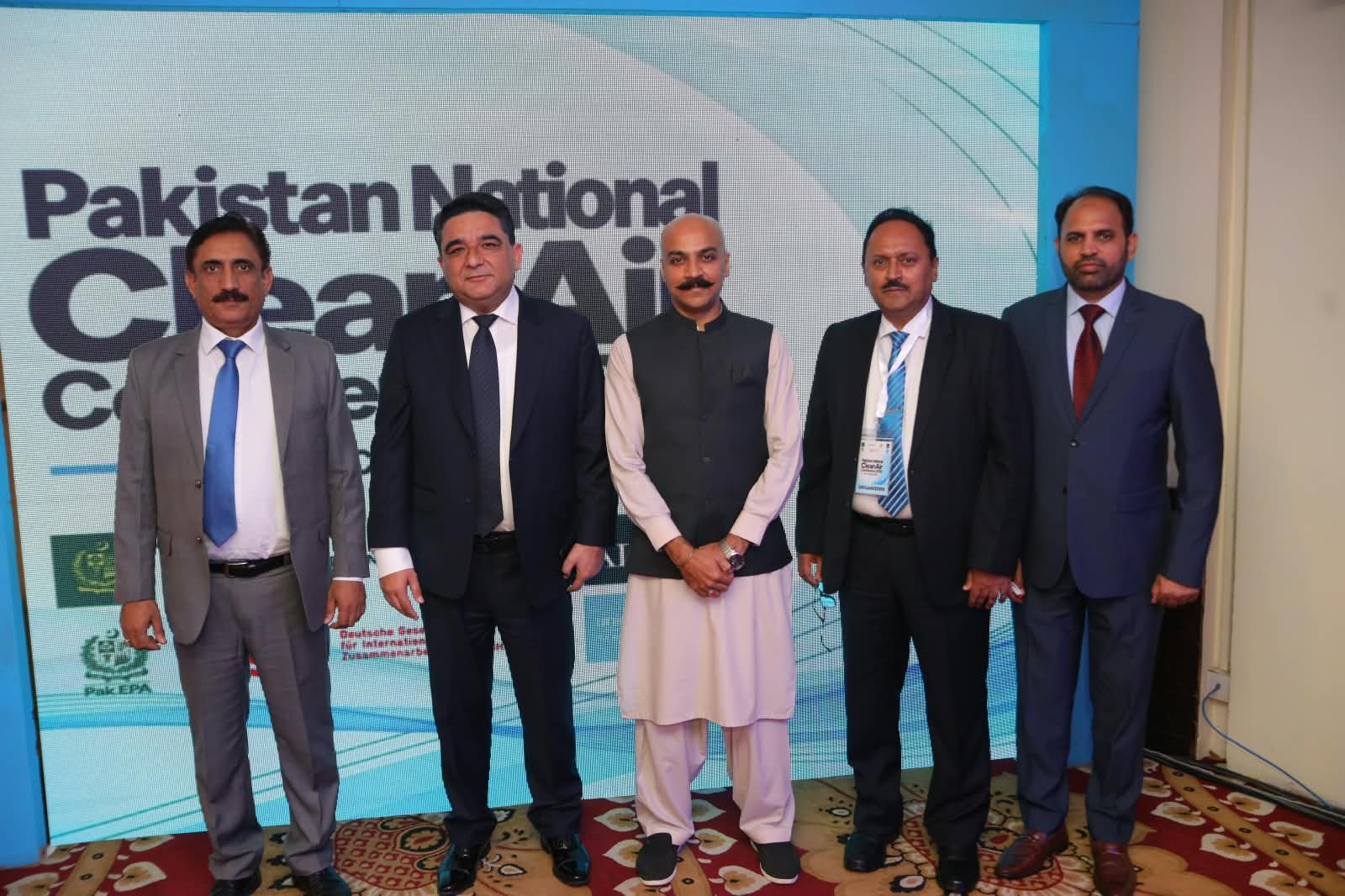
Islamabad: The Pakistan National Clean Air Conference concluded on Thursday with the adoption of the Islamabad Clean Air Compact, committing federal and provincial stakeholders to a collaborative framework centred on time-bound implementation, stricter enforcement, regular emissions inventories and annual review meetings.
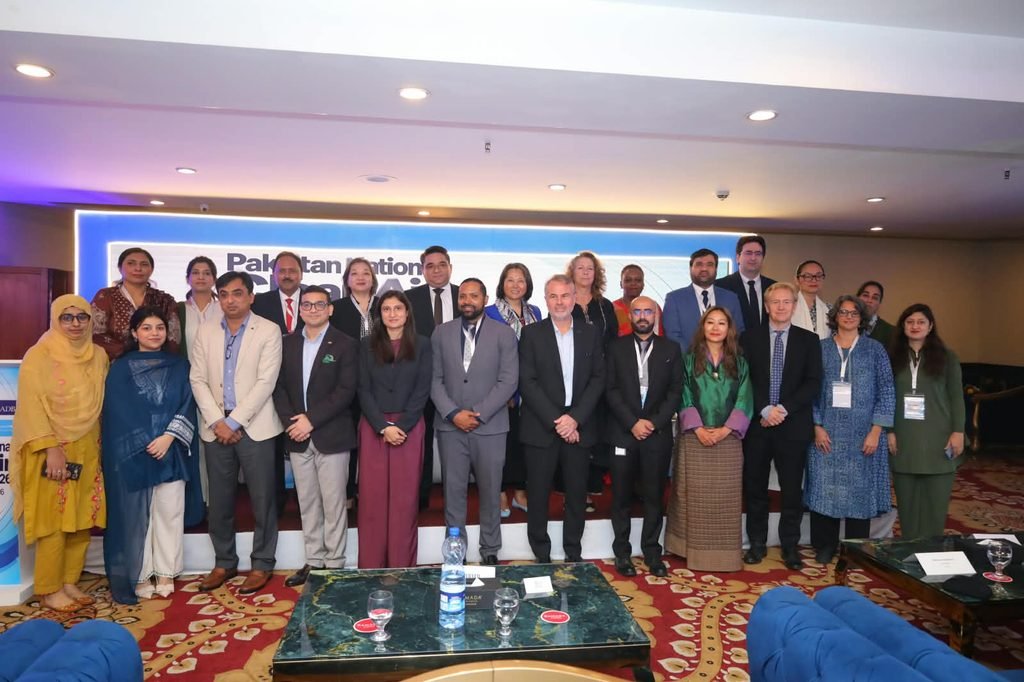
The two-day conference brought government officials, provincial environmental protection, including Azad Jammu and Kashmir, Gilgit-Baltistan, and international development partners together to develop practical responses to air pollution, with discussions focusing on monitoring, transport emissions, agricultural burning, industrial pollution, clean cooking and climate finance.

The closing session underscored the need to move beyond policy formulation towards coordinated implementation, supported by reliable data, clear institutional responsibilities and sustainable financing.
Syed Abrar Hussain, Director General of the Pakistan Environmental Protection Agency, highlighted the importance of multi-sectoral and regional strategies, advance planning before the smog season and stronger monitoring mechanisms.
The compact envisages regular reviews and a more coordinated federal-provincial approach to air quality management, although the detailed implementation timelines and responsibilities of individual institutions will be critical to assessing progress.
During the technical sessions, Wajid Ijaz of the Environment Protection and Climate Change Department stressed that reliable data was central to effective air quality governance, including decisions about regulatory interventions, legal instruments and public spending.
He said the governance cycle should begin with investment in air quality monitoring and analytics, supported by source-apportionment studies, emissions inventories, real-time source tracking and modelling tools.
Such information could enable authorities to target actual pollution sources rather than impose broad restrictions without sufficient evidence, he said. Data could also guide interventions in clean cooking, transport and crop-residue management, while helping inform the public about pollution exposure and preventive health measures.
The governance roadmap presented at the conference proposed establishing legal and regulatory frameworks, improving coordination between institutions and securing annual budget allocations in the short term. Medium- and long-term measures included a national secretariat, stronger provincial oversight, public-private partnerships and improved data governance. Financing emerged as another major challenge.
Andrew McCarthy of the Asian Development Bank called for a consensus statement defining responsibilities between federal and provincial governments and the establishment of a National Clean Air Financing Framework.
The proposed framework would bring together public budgets, fiscal transfers, climate and green finance, development-partner resources and private investment to support large-scale air quality improvements.
Dr Waqas Ahmed Khan of the World Bank said Pakistan needed to develop a pipeline of investable projects capable of generating carbon credits and attracting financing.
A presentation outlined potential across transport, agriculture and other sectors, citing an estimated 984,050 credits and 35.6 million tonnes of carbon dioxide equivalent over 10 years. It also referred to a potential value of $5.9 million to $8.85 million.
The presentation called for robust baselines, measurement, reporting and verification systems, safeguards and federal-provincial approvals to ensure the credibility of carbon credits. It also recommended engaging prospective buyers early to establish demand and develop financing arrangements.
Muhammad Abid of GIZ explained the distinction between compliance carbon markets, in which credits are used under legally binding emission-reduction frameworks, and voluntary markets, where organisations purchase credits voluntarily.
He also discussed Article 6.2 of the Paris Agreement, which enables countries to transfer internationally recognised emission reductions through cooperative arrangements, subject to accounting rules intended to prevent double counting.
Transport was another key area of discussion, with government departments and development partners outlining a phased approach to reducing emissions.
Short-term priorities included improving vehicle inspection systems, establishing electric-vehicle charging infrastructure, collecting emissions data and promoting electric ride-sharing. Medium-term measures included expanding mass transit, supporting vehicle purchases through subsidies and loans, improving freight efficiency and integrating vehicle-registration systems.
Longer-term proposals included expanding metro and rail networks, incorporating transit-oriented development into urban planning, managing electric-vehicle battery waste and shifting more freight transport to rail.
Participants also discussed agricultural and waste burning, with a roadmap proposing stronger enforcement and farmer awareness in the short term, followed by crop-specific mechanisation, improved supply chains and economic uses for agricultural residues.
Longer-term proposals included developing crop-residue value chains, providing farmer financing, exploring carbon credits and reviewing policies while protecting food security.
For industry and brick kilns, the proposed measures included baseline fuel and emissions surveys, standards for continuous emissions monitoring systems, energy audits and boiler improvements. Subsequent phases would focus on modernising brick kilns, standardising industrial processes, independent compliance monitoring and financial incentives for pollution-control equipment.
Clean cooking was identified as another important area for intervention. Muhammad Abid said Pakistan needed approaches suited to local conditions, with around 60 per cent of the population relying on solid fuels such as wood and crop residues, according to the presentation.
He called for clear implementation milestones, the development of viable markets rather than dependence on handouts, and public-private partnerships that could create opportunities for women entrepreneurs.
The clean-cooking roadmap proposed awareness campaigns, household training, reliable alternative energy supplies and microfinance in the short term. Longer-term measures included quality standards, testing facilities and the integration of community-led approaches into national and regional policies.
The discussions also highlighted the importance of addressing pollution before the winter smog season rather than relying primarily on emergency restrictions once air quality deteriorated.
Dr Zaigham Abbas, spokesperson for the Pakistan Environmental Protection Agency (Pak-EPA),Ministry of Climate Change and Environmental Coordination emphasised the need for development partners, including the World Bank, Asian Development Bank, UNICEF, GIZ and ICIMOD, to support the implementation of the National Clean Air Policy 2023 through practical, technology-driven measures to address air pollution at its sources, including transport, energy, waste management, household cooking and industry.
The conference’s closing compact provides a framework for cooperation, but its effectiveness will depend on translating the proposals into funded programmes, assigning responsibilities to the relevant authorities and regularly measuring implementation against agreed targets.
The two-day conference was organised by the Pakistan Environmental Protection Agency (Pak-EPA) in collaboration with development partners, including the World Bank, Asian Development Bank, UNICEF and GIZ.