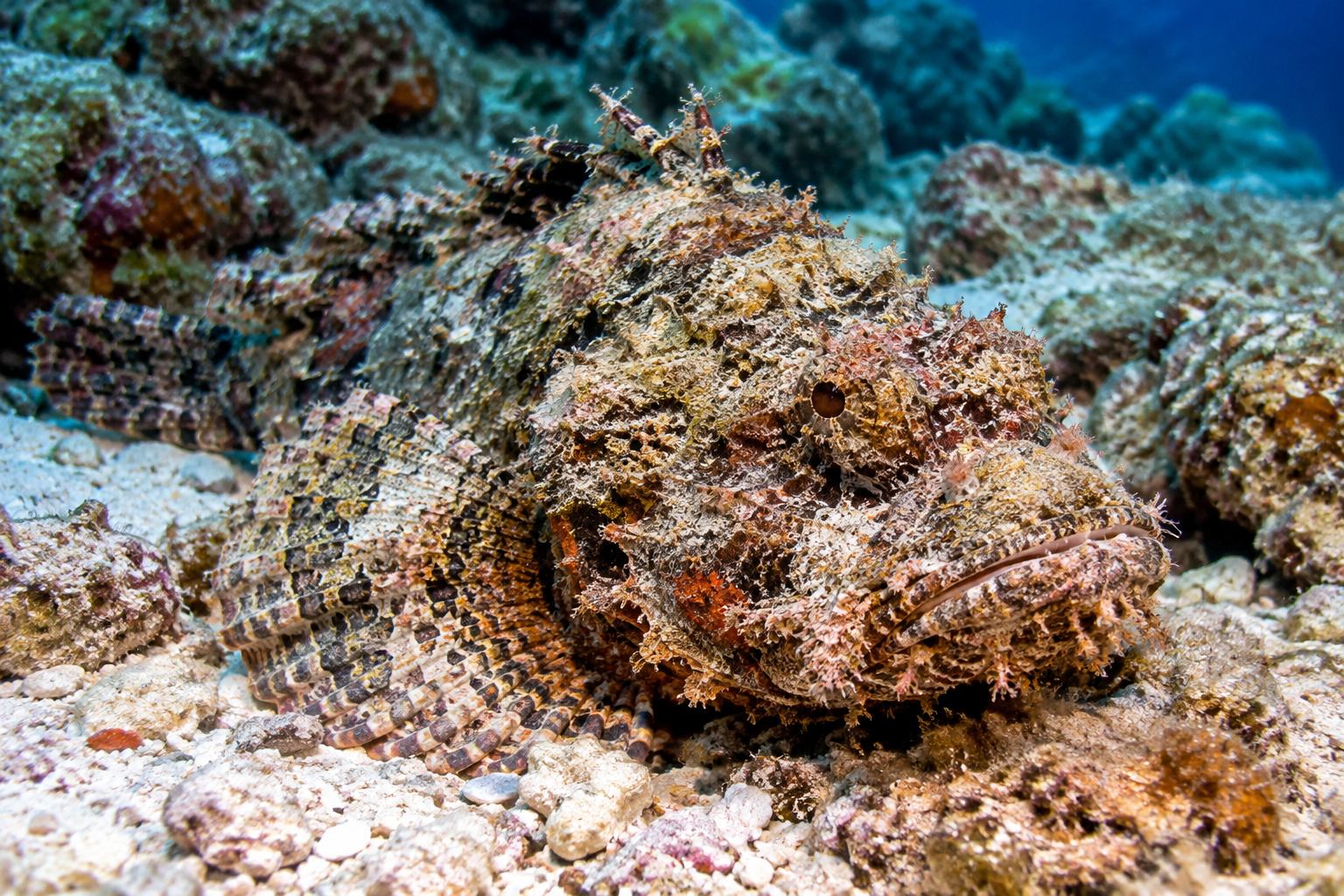
ISLAMABAD, Pakistan: Beneath the calm surface of tropical seas lies a predator that can be almost impossible to spot. The stonefish, widely regarded as one of the world’s most venomous fish, has evolved an extraordinary ability to blend into its surroundings, often resembling an ordinary rock on the seabed.
Found mainly in Indo-Pacific coastal waters and around coral reefs, stonefish can remain motionless for long periods, relying on camouflage to avoid detection and ambush prey. Their appearance makes them particularly difficult for divers and people walking in shallow coastal waters to identify.
Venomous Spines Make the Stonefish Dangerous

One of the fish’s most notable defensive features is the series of sharp spines along its dorsal fin. These spines can inject venom when pressure is applied, such as when a person accidentally steps on the fish.
A stonefish sting can cause extreme pain, swelling and serious medical complications. In severe cases, the venom can affect the cardiovascular and nervous systems and may become life-threatening without prompt medical treatment.
The severity of symptoms can vary depending on factors such as the amount of venom injected and the location of the sting. Immediate medical attention is therefore essential following a suspected stonefish envenomation.
A Hidden Hazard in Shallow Waters
The stonefish’s remarkable camouflage is both its greatest advantage and a potential danger to humans. Because it can closely resemble rocks, coral or other material on the seabed, swimmers and divers may not notice it before coming into contact with its spines.
Marine experts generally advise people exploring tropical coastal waters to avoid touching unfamiliar objects and to wear appropriate protective footwear where stonefish may occur.
Nature’s Remarkable Adaptation
Beyond its danger to humans, the stonefish demonstrates the extraordinary adaptations found in marine ecosystems. Its ability to disappear visually into the seabed is a powerful example of natural camouflage and survival.
The species serves as a reminder that seemingly harmless surroundings beneath the water can contain highly specialised marine life. Awareness, caution and respect for wildlife are essential when exploring coral reefs and tropical coastal environments.