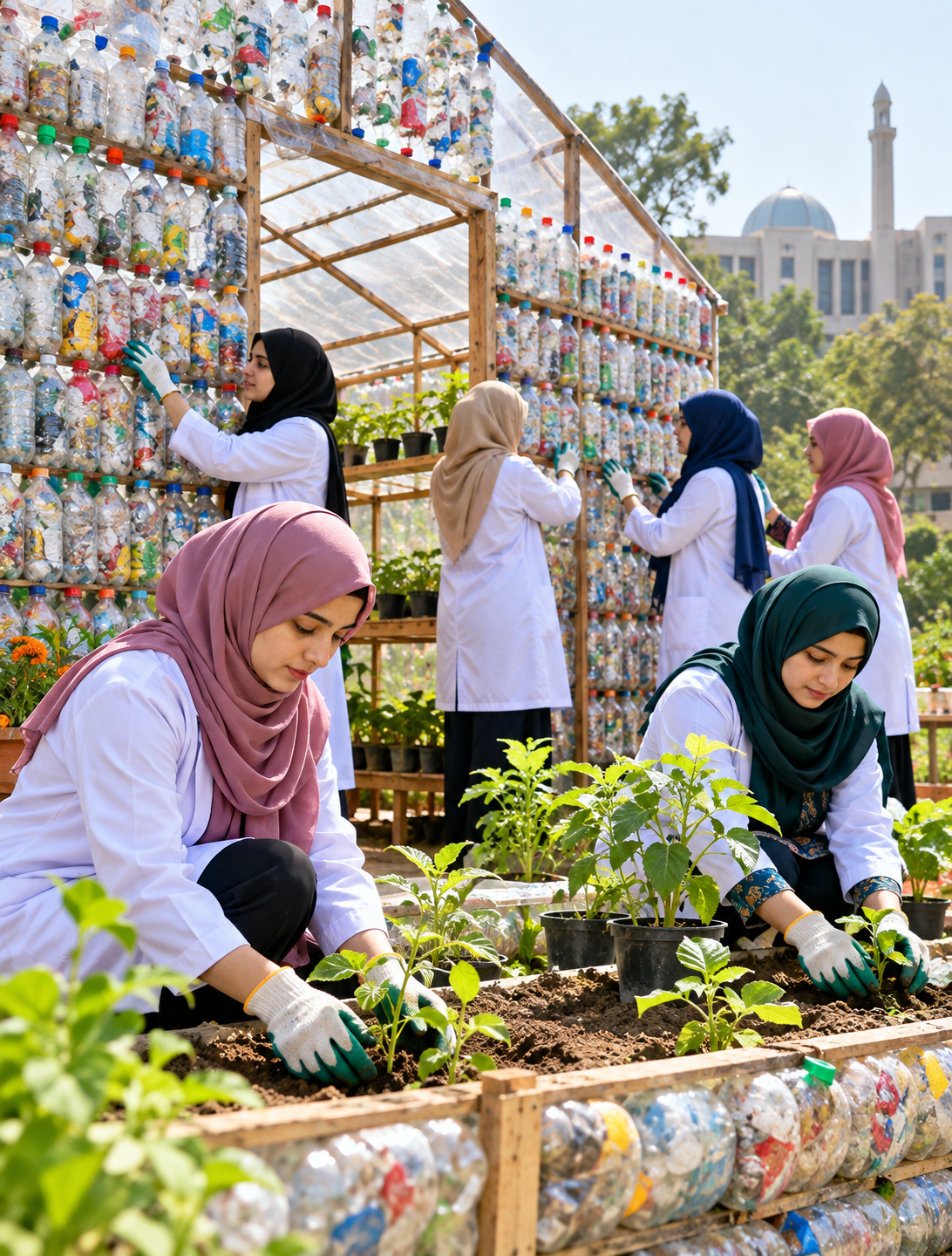
ISLAMABAD, Pakistan: Students from the Department of Environmental Science at the Female Campus of the International Islamic University Islamabad (IIUI) are promoting plastic waste reuse through an innovative project titled “Ecobrick Greenhouse: Turning Plastic Waste into a Growing Space” under the HUM HAIN Pakistan SDG Youth Campaign 2026.
Led by Dr. Sarah Amir, Assistant Professor and In-Charge Academic Affairs, the initiative brings together 10 students from different batches of the department. The project is being implemented at the IIUI Female Campus from September to November 2026.

The project explores the use of discarded plastic bottles and other plastic waste as building materials for a greenhouse, creating a space for growing plants while raising awareness about plastic pollution and resource conservation.
By repurposing waste materials, the initiative aims to demonstrate how discarded plastic can be given a productive use rather than being sent to landfills or entering the natural environment. It also provides students with practical experience in waste management, sustainable resource use and environmentally responsible practices.
The project aligns with seven United Nations Sustainable Development Goals (SDGs): Affordable and Clean Energy (SDG 7), Industry, Innovation and Infrastructure (SDG 9), Sustainable Cities and Communities (SDG 11), Responsible Consumption and Production (SDG 12), Climate Action (SDG 13), Life Below Water (SDG 14) and Life on Land (SDG 15).
Through this student-led initiative, participants are exploring practical ways to reduce waste and encourage more responsible consumption. The project also seeks to connect classroom learning with hands-on environmental action, demonstrating how young people can contribute to sustainability efforts within their university community.
The Ecobrick Greenhouse initiative highlights the role of environmental education and youth engagement in promoting waste reduction, resource efficiency and awareness of the wider environmental impacts of plastic pollution.