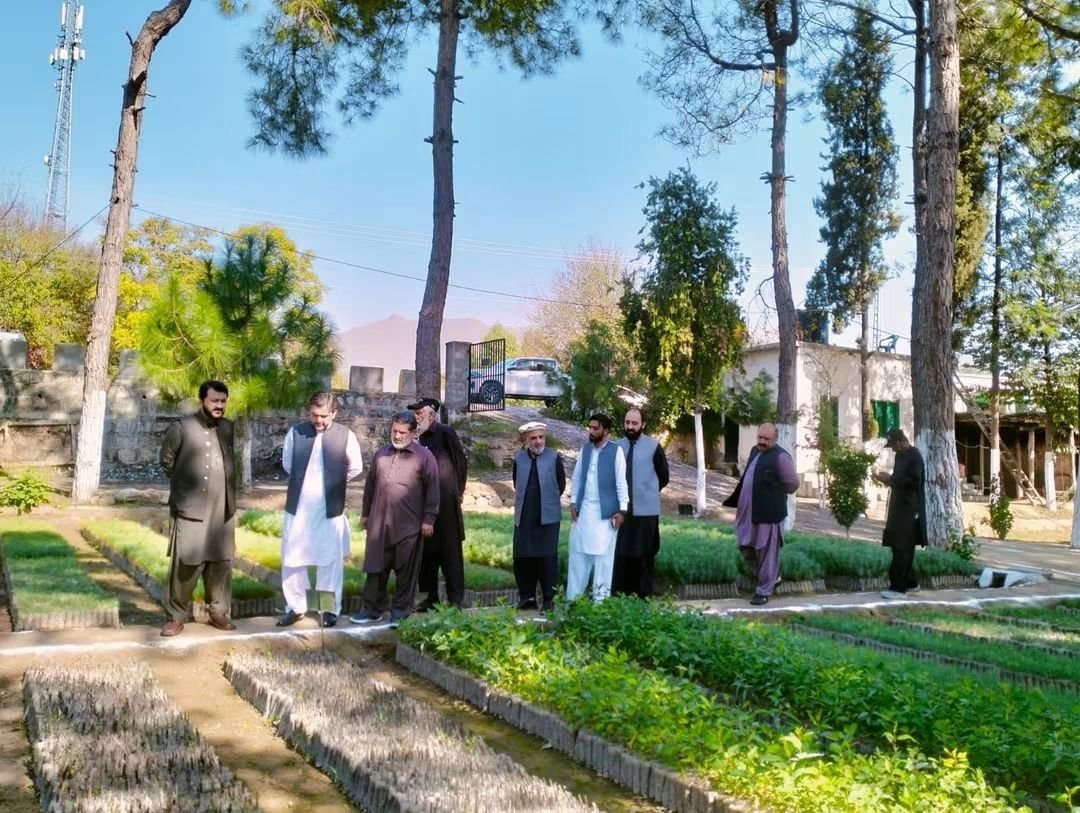
PESHAWAR: A joint departmental team inspected Khar Wildlife Pheasantry, adjoining land and four forest nurseries in Bajaur on October 16, 2026, to strengthen wildlife conservation, improve forest management and support the expansion of green cover across Khyber Pakhtunkhwa.
The visit was conducted in line with decisions taken at a meeting chaired by the Secretary of the Climate Change, Forestry, Environment and Wildlife Department, Khyber Pakhtunkhwa, on October 2.

The team assessed conditions at the pheasantry and surrounding land and discussed arrangements to improve coordination between the Forest and Wildlife departments while ensuring the effective use of departmental resources and protection of wildlife habitats.
The inspection included the Conservator of Forests, Central Forest Circle, Peshawar; the Conservator of Wildlife, Malakand; Divisional Forest Officer Bajaur Muhammad Rashid; and relevant wildlife officers from the district.
During the visit, Muhammad Rashid briefed the forest officials on nurseries established under the Ten Billion Tree Plus (10-BTTP) initiative, particularly the Upland Green Pakistan Project (UGPP). He highlighted their role in producing planting stock for afforestation, forest restoration and environmental rehabilitation.
Four nurseries hold approximately 425,500 plants
The team inspected four departmental nurseries containing a combined stock of approximately 425,500 plants, according to the department.
The nursery details are as follows:
- Jar tube nursery: Spread over 0.2 hectares, it contains approximately 247,000 plants.
- Shawary bare-rooted nursery: Covering one hectare, it holds around 123,500 plants.
- Haji Lawang ornamental nursery: Contains approximately 45,000 plants.
- Haji Lawang fruit nursery: Holds around 10,000 plants.
The nurseries contain a variety of forest, fruit-bearing and ornamental species, including Phulai, Shisham, Chir, Olive, Eucalyptus, Poplar, Willow, Mulberry, Pomegranate, Guava, Plum, Apple, Lemon, Roses, Hibiscus and Gardenia.
The diversity of plant species provides material for different forestry, landscaping and environmental restoration requirements. Fruit-bearing plants may also support productive green spaces and create opportunities to benefit local communities.
Focus on plant quality and sustainable forest management
The inspection team emphasised the importance of maintaining healthy nursery stock, improving plant quality, ensuring appropriate watering and maintenance, and strengthening pest and disease management.
Officials noted that access to healthy, locally suitable planting material is important for improving seedling survival and achieving successful plantation outcomes. Effective nursery management can help ensure that resources allocated to forestry and environmental initiatives deliver lasting benefits.
Field staff were directed to improve nursery upkeep, maintain plant-care standards and strengthen monitoring. Officials were also instructed to continue coordinating across departments to improve operational efficiency.
The visit reaffirmed the department’s focus on wildlife habitat protection, sustainable forest management and the expansion of green infrastructure in Khyber Pakhtunkhwa.
Maintaining healthy nurseries and protecting wildlife habitats are complementary elements of conservation, helping support biodiversity, restore degraded landscapes and strengthen ecosystems for future generations.