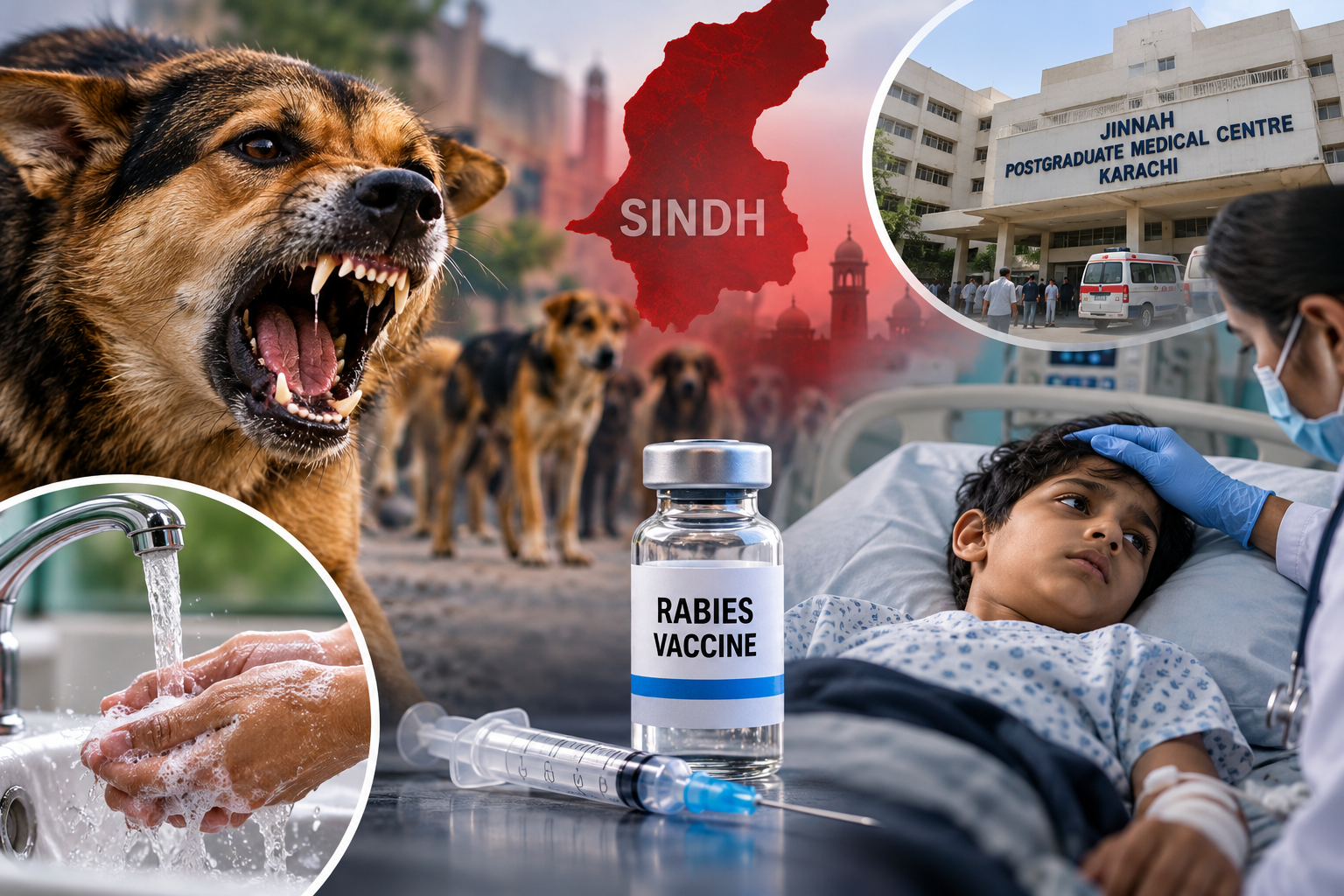
KARACHI: Sindh has reported 38 rabies-related deaths this year, as a 12-year-old boy from Hyderabad battles suspected rabies encephalitis at Jinnah Postgraduate Medical Centre (JPMC) in Karachi following a dog bite that went untreated for nearly two months.
In a separate case, a 38-year-old man from Tharparkar has died of rabies despite receiving four doses of the rabies vaccine, highlighting the importance of immediate wound care and timely medical assessment after animal bites.

According to JPMC, the boy was bitten on his hand and chest approximately two months ago but did not receive the rabies vaccine at the time. He was brought to the hospital after developing symptoms including fear of water and irritability, prompting doctors to suspect rabies encephalitis.
Hospital officials said the boy received his first vaccine dose in the emergency department and was being transferred to the intensive care unit for further treatment and monitoring.
JPMC Chief Medical Officer Dr Ammar Danish said public awareness about rabies prevention remained inadequate despite government awareness campaigns. He also expressed concern over the growing population of stray dogs and the increasing number of dog-bite incidents.
Dr Danish advised people to immediately wash bite or scratch wounds with soap and running water for at least 15 minutes and seek urgent medical attention. He warned against relying on home remedies, including applying chilli or oil to wounds, and stressed the importance of timely vaccination and rabies immunoglobulin when medically indicated.
Meanwhile, Naimatullah, a 38-year-old resident of Tharparkar, died at Indus Hospital Karachi after developing symptoms of rabies. Hospital officials said he had received four vaccine doses at the Tehsil Headquarters Hospital in Diplo between July 25 and August 8.
He was admitted to Indus Hospital on October 7. According to hospital officials, an initial assessment suggested that the bite wound might not have been cleaned properly before the patient subsequently developed symptoms and died.
Rabies is a viral disease that affects the central nervous system and is almost invariably fatal once clinical symptoms appear. However, prompt and appropriate medical care after a potentially infectious bite or scratch can prevent the disease from developing. Immediate wound washing, post-exposure vaccination and rabies immunoglobulin when indicated are key components of prevention.
The reported cases underscore the need to improve public awareness, ensure timely access to rabies vaccines and immunoglobulin, and strengthen coordinated measures to prevent dog bites. Health experts also emphasise the importance of responsible dog-population management and accessible post-exposure treatment, particularly for communities with limited access to healthcare.
Public health advisory: Anyone bitten or scratched by a dog or another potentially rabies-infected animal should wash the wound with soap and running water for at least 15 minutes and seek medical care immediately. Do not wait for symptoms to appear or rely on home remedies.