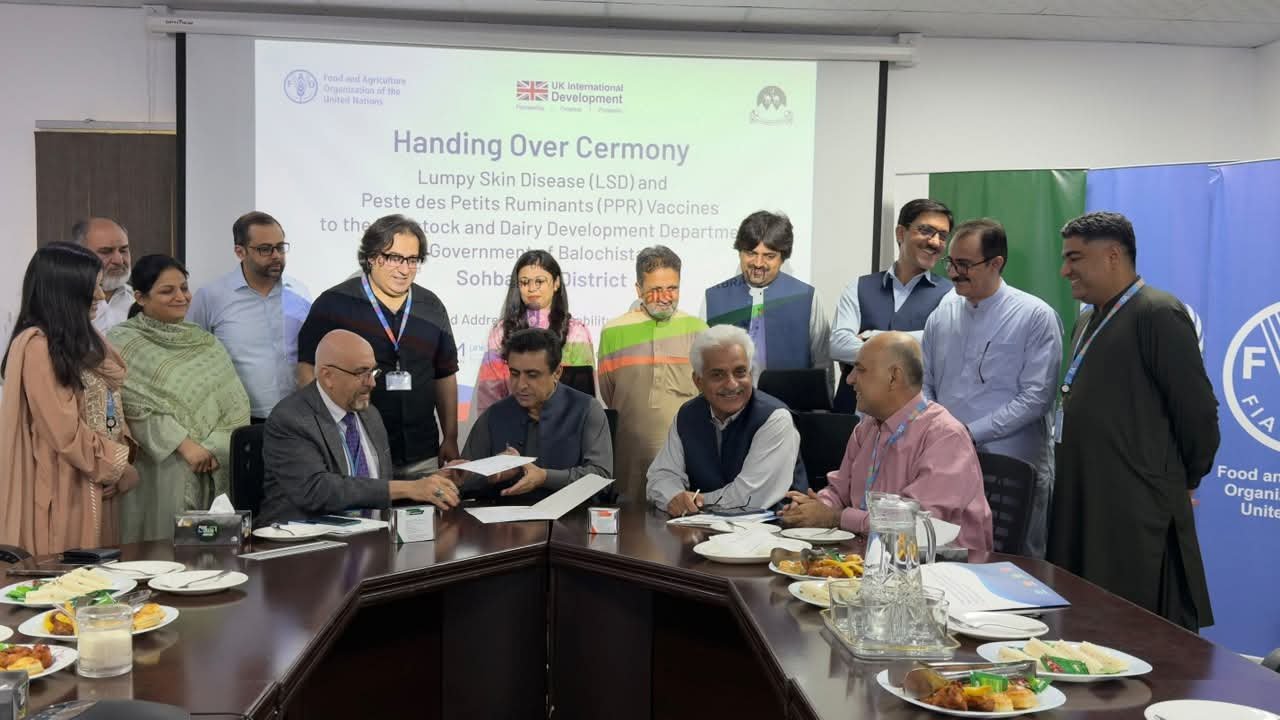
QUETTA: The Food and Agriculture Organization of the United Nations (FAO) has provided vaccines against Peste des Petits Ruminants (PPR) and Lumpy Skin Disease (LSD) to the Livestock & Dairy Development Department of the Government of Balochistan to support efforts to prevent and control livestock diseases across the province.
The assistance comes as Lumpy Skin Disease is being reported in several districts of Balochistan, highlighting the importance of timely vaccination, disease surveillance, early detection and rapid veterinary response to protect livestock and reduce economic losses for livestock-dependent households.

PPR is a highly infectious disease affecting sheep and goats, while LSD primarily affects cattle and buffaloes. Vaccination, combined with effective surveillance and timely veterinary services, remains essential to reducing disease risks and maintaining livestock health and productivity.
“Lumpy Skin Disease currently reported in different districts of the province makes strengthening disease prevention, surveillance and vaccination particularly important to protect livestock and reduce avoidable losses for livestock keepers,” said Saleh Mohammad Baloch, Secretary of the Livestock & Dairy Development Department, Government of Balochistan.
Waleed Mahdi, Head of Office, FAO Balochistan, said the vaccine provision would support the provincial government’s efforts to strengthen animal-health protection and safeguard the livelihoods of communities dependent on livestock.
Livestock plays an important role in rural livelihoods, particularly in areas where households depend on animals for income, food and other essential resources. Disease outbreaks can therefore have consequences extending beyond animal health, affecting household incomes and local food security.
Strengthening vaccination coverage, veterinary capacity and disease surveillance can help authorities detect outbreaks earlier and respond more effectively, reducing the risk of wider transmission and avoidable livestock losses.
The vaccine support is being provided under the Building Resilience and Addressing Vulnerabilities to Emergencies (BRAVE) Programme, funded by the UK’s Foreign, Commonwealth & Development Office (FCDO).
The initiative reflects the importance of coordinated animal-health measures in building resilient livestock systems, particularly in communities vulnerable to disease outbreaks and other environmental and economic pressures.