SEOUL, September 8, 2026: Clean air took center stage in Seoul this week as policymakers, scientists and environmental experts from across North-East Asia gathered to discuss growing air pollution challenges and emerging solutions for cleaner skies.
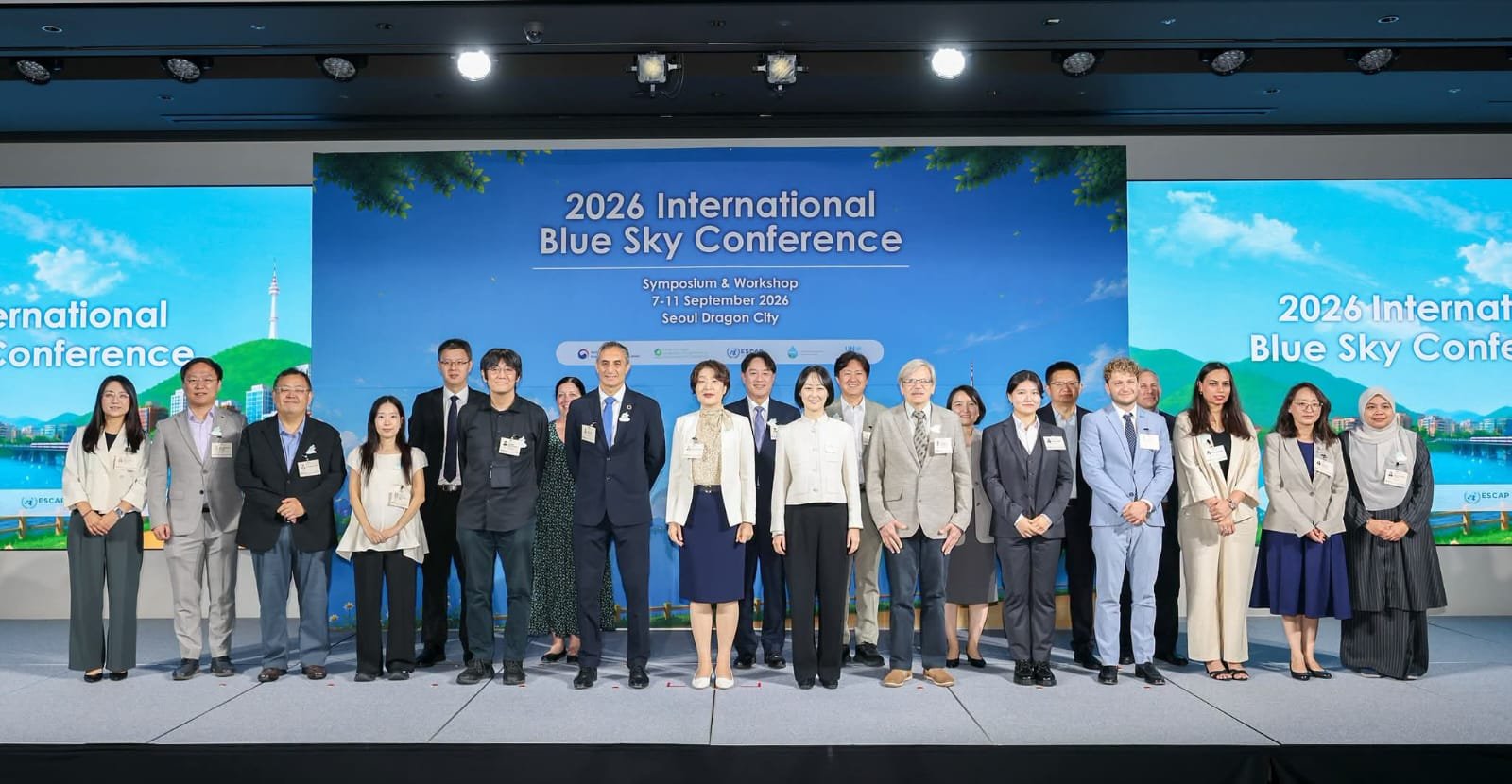
The UN Environment Programme (UNEP), which serves as the Secretariat for the Acid Deposition Monitoring Network in East Asia (EANET), joined the National Air Emission Inventory and Research Center (NAIR) of the Republic of Korea and the United Nations Economic and Social Commission for Asia and the Pacific (UN ESCAP) to co-organize a symposium marking the International Day of Clean Air for blue skies.

The symposium was held as part of the 2026 International Blue Sky Conference, taking place from September 7 to 11 in Seoul.
Discussions focused on fine particulate matter (PM2.5) and ground-level ozone, two major air pollutants that continue to pose risks to human health, ecosystems and food security across the region.
Experts highlighted the need for stronger and more integrated approaches to air quality management, particularly as urbanization, industrial activity and changing environmental conditions continue to influence pollution levels across Asia.
The symposium also explored the growing role of artificial intelligence (AI) and advanced technologies in air quality monitoring and forecasting.
AI-powered tools could help authorities improve their ability to identify pollution patterns, forecast deteriorating air quality and provide earlier warnings before pollution levels reach dangerous peaks.
The discussions underscored the importance of cooperation among governments, scientific institutions and international organizations in addressing air pollution, which often crosses national boundaries and requires coordinated regional responses.
Improved monitoring, data sharing and forecasting can help policymakers develop more effective measures to reduce emissions while protecting vulnerable communities and ecosystems.
The Seoul discussions also highlighted the close links between clean air, public health, environmental protection and food security, reinforcing the need to integrate air quality considerations into broader environmental and climate policies.
The International Day of Clean Air for blue skies, observed annually on September 7, serves as a global reminder of the importance of clean air and collective action to tackle air pollution.
As North-East Asian countries continue to confront complex air quality challenges, experts emphasized that stronger regional cooperation combined with innovative technologies could play an important role in building healthier communities and cleaner, more resilient environments.