STOCKHOLM, September 7, 2026: As World Water Week 2026 concluded in Stockholm, discussions on water security and climate resilience highlighted the need to move beyond conventional infrastructure and place communities, gender equality and inclusive decision-making at the heart of resilience planning.
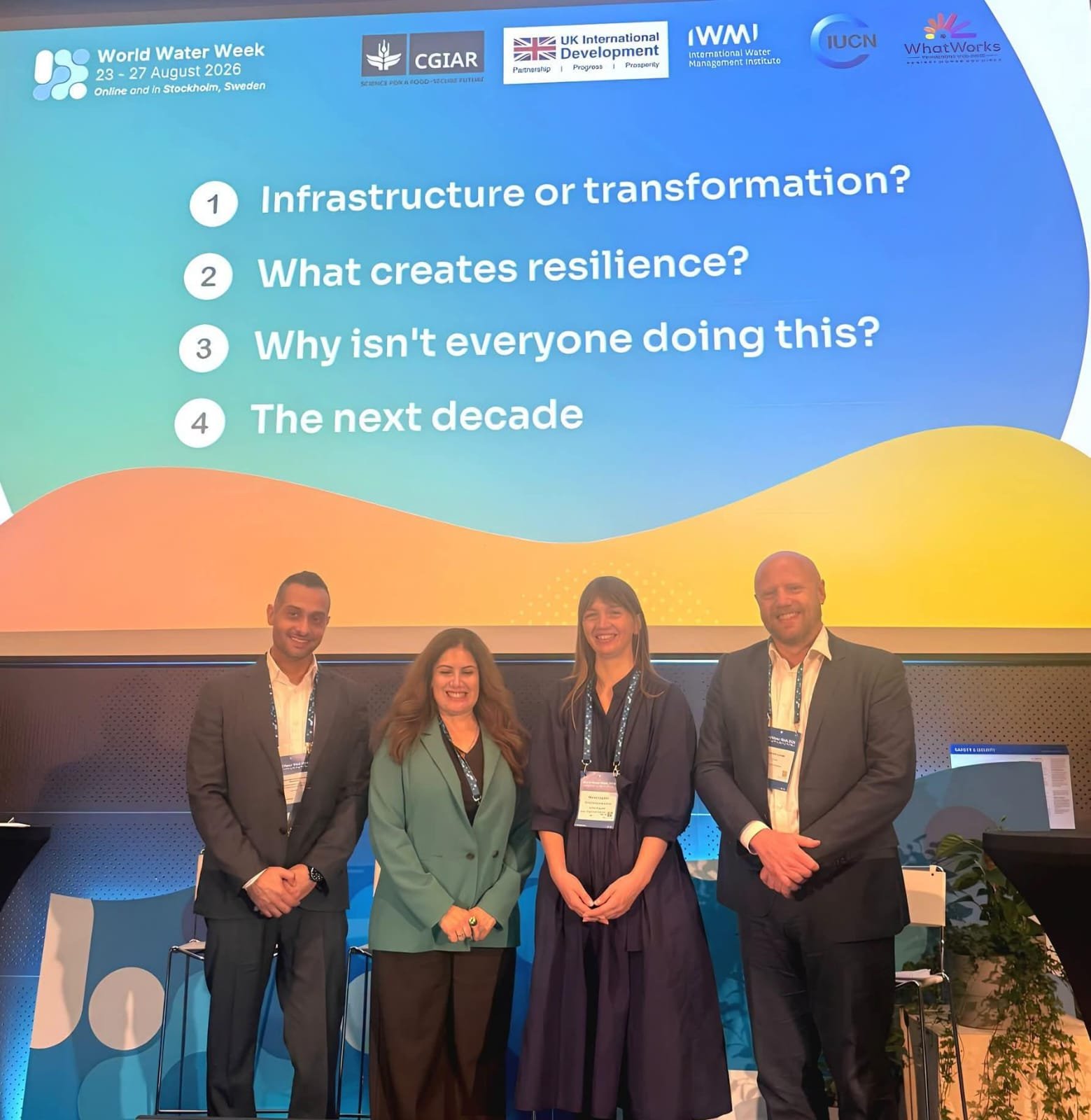
A key discussion took place during the International Water Management Institute (IWMI) session titled “The Evidence Is In: Gender-Transformative Water for Fragile Contexts.” Funded by UK International Development, the initiative draws on experience and evidence from Egypt, Jordan, Lebanon and Palestine.

The session examined what it takes to build lasting resilience in fragile and climate-vulnerable settings, with speakers highlighting evidence that integrated, gender-transformative approaches can strengthen not only water systems but also households, livelihoods and communities.
Hakam Mandouri of IUCN, Naomi Clugston of Social Development Direct, and Andrew Lucas of the UK Foreign, Commonwealth & Development Office shared insights from work focused on integrating gender considerations into water and resilience programming.
The discussion raised a fundamental question for policymakers and development partners: if evidence demonstrates the value of integrated and gender-transformative water programming, why is it not yet the default approach to financing resilience?
Moderator Sawsan Gharaibeh, IWMI Regional Researcher on Gender and Social Inclusion and Lead of the Al Murunah Plus Project, emphasized that resilient water systems depend on more than canals, springs and physical infrastructure.
According to the discussion, resilience is also built through trust, shared decision-making and meaningful participation, enabling both women and men to have a role in shaping decisions that affect their water security, livelihoods and future.
The conclusions from Stockholm are now expected to feed into wider international discussions on water and climate resilience, including the 2026 UN Water Conference in Abu Dhabi, United Arab Emirates.
The transition from evidence to policy and investment will be crucial as countries and development institutions seek scalable solutions to growing water insecurity, climate risks and vulnerability in fragile contexts.
The World Water Week discussions therefore ended with a clear message: building resilient water systems requires investment not only in infrastructure, but also in people, institutions, inclusion and locally grounded solutions.
The evidence has been presented. The next challenge is turning that evidence into policy and investment at scale.