Turkiye-Pakistan ‘Sister Cities’ Pilot proposed for age-friendly smart urban planning: Dr Kemal
Pakistan urged to train Geriatric Caregivers for export to Europe’s ageing population
Dr Suleri calls for inclusive development model covering Pakistan’s ageing citizens
16.6 mln elderly in Pakistan set to more than double by 2050: FAID CEO
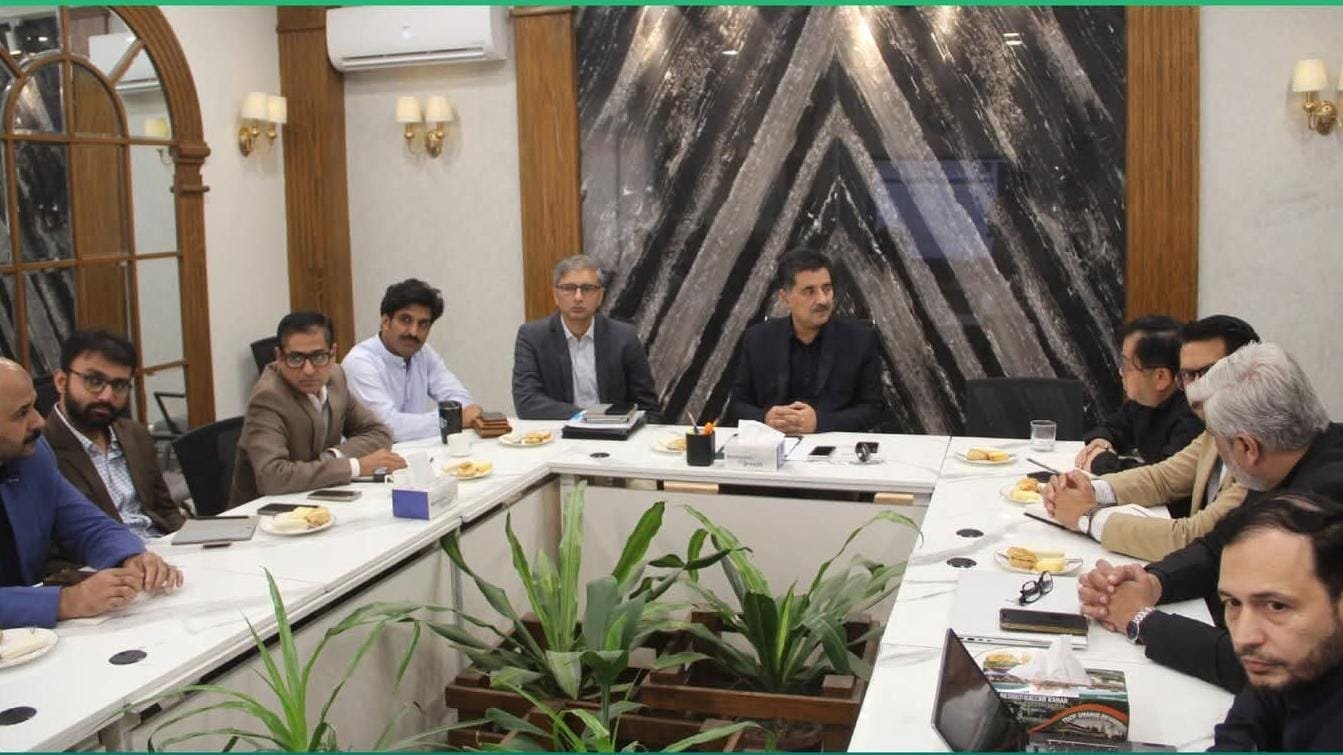
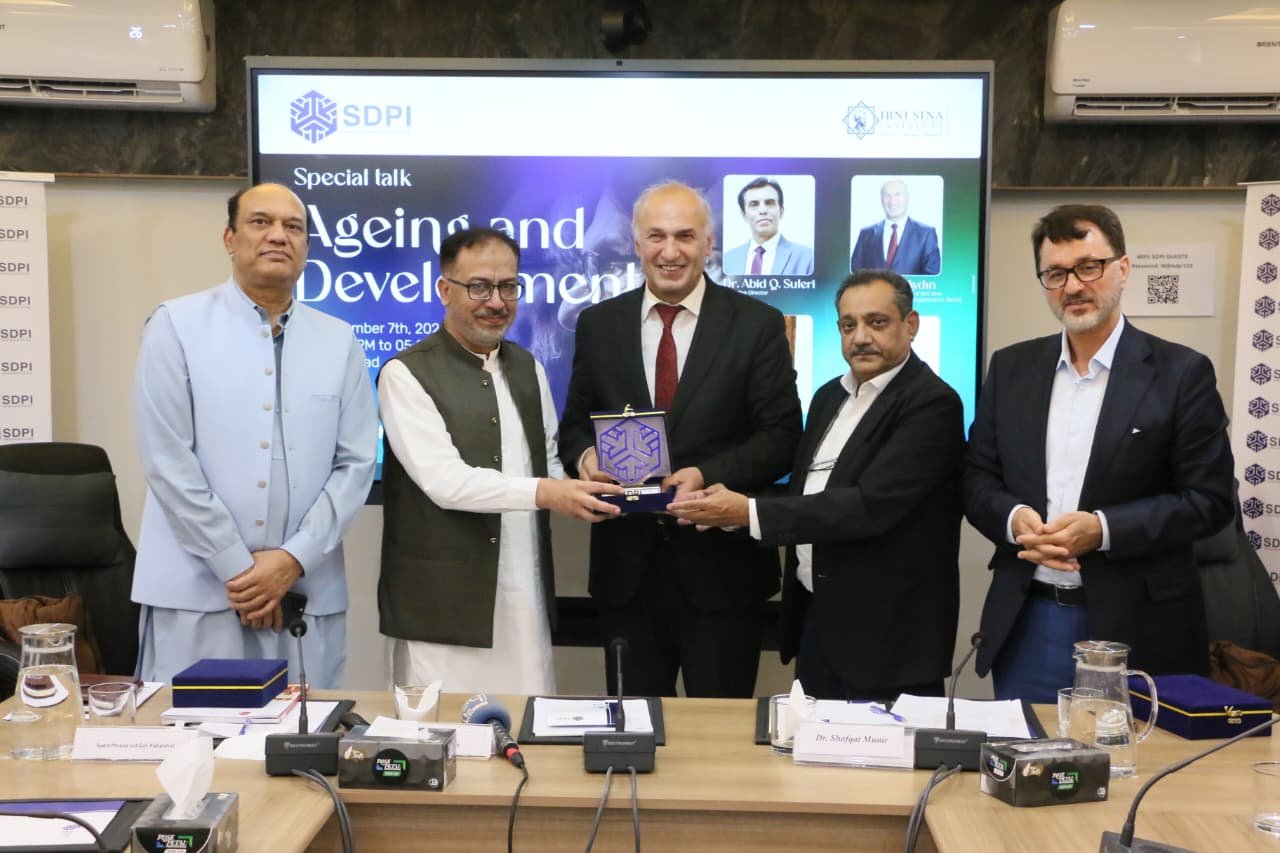
Islamabad: The Sustainable Development Policy Institute (SDPI), in collaboration with the Ibni Sina Institute, Turkiye, held a special talk on “Ageing and Development,” bringing together experts to discuss the health, policy and spiritual dimensions of an ageing world population.
Dr Kemal Aydīn, gerontologist and President of the Ibni Sina Institute and the World Ageing Organization, was the guest speaker. He said the discussion addressed the spiritual, health and policy sides of ageing. Sharing his background, he recalled completing his MBBS from Allama Iqbal Medical University, Lahore, and his subsequent study of Islam. He said efforts are underway to develop a geriatric institution at the South Asia level, noting that Pakistan has many expert geriatricians working abroad who could contribute to this goal.
Dr Aydīn said the scholar Ibni Sina was more widely recognised in Europe than in the Muslim world, even though Muslim scholars had contributed significant knowledge to Western nations. He observed that Europe leads in geriatric psychology and care, while ageing Muslim minorities in Europe often remain unaware of Islamic concepts of caregiving.
He noted that following the third World Assembly on Ageing held by the UN, a subsequent assembly was held in Turkiye in 2023 focusing on the Islamic concept of ageing. He said ageing is not limited to one cohort but is inclusive, and that development approaches to ageing should be inclusive as well. He added that the concepts of age-friendly communities and age-friendly workplaces emerged from efforts at the UN level.
Dr Aydīn called for stronger linkages between universities working on longevity and ageing for development. He stressed that ageing is a process, not a disease, and that older people can continue to contribute through their experience, knowledge and wisdom. He said elderly people are often not recognised as a source of barakah (blessing).
Referring to the ongoing UN General Assembly session in New York, he called for a global convention on ageing, saying the elderly population remains neglected worldwide. He cited UN data showing the global population of elderly persons currently stands at one billion, projected to reach two billion by 2050, and said global funding is needed to train geriatric nurses, doctors and caregivers.
He emphasised community-based care to reduce repeated hospital visits and proposed developing age-friendly smart cities, suggesting a pilot “sister cities” initiative between Turkiye and Pakistan. He also proposed a “hospital at home” initiative funded publicly and supported through community mobilisation, drawing on the European model where neighbours care for elderly neighbours.
Dr Aydīn said Pakistan could contribute globally through the “silver economy,” noting that Europe needs thousands of trained caregivers, care specialists and care managers. He said European countries are currently looking to Sri Lanka and India for this workforce and suggested Pakistan should also develop a programme to train geriatric care workers, potentially supported through OIC funding. He described ageing as a humanitarian issue that should be addressed beyond biases, adding that while the EU has funding available for ageing-related programmes, it lacks a trained caregiving workforce.
Dr Abid Qaiyum Suleri, Executive Director of SDPI, in his welcome remarks, said the demographic dividend of today’s youth would, in time, become an ageing population carrying valuable experience. He said the ongoing debate on Pakistan’s youth bulge must also account for the fact that in three decades this same population will be an ageing one. He referred to countries such as Japan and EU member states where ageing populations have become a serious liability, contrasting this with Turkiye’s model, where, despite a population of 88 million, both ageing and youth populations are engaged in contributing to development.
Dr Suleri said old-age homes in Western countries often function as communities of like-minded individuals with active networks, framing ageing as a choice between withdrawal and active participation through shared experience and community engagement. He said South Asian societies need to challenge prevailing concepts of both ageing and development to make them inclusive of the ageing population.
Syed Moeez Ud Din Kakakhel, CEO of Foundation for Ageing and Inclusive Development (FAID), said that around a decade and a half ago, policy circles did not consider ageing an issue, viewing Pakistan as a young nation and deferring the matter for later attention. He said the discourse has since evolved into policy, with government recognition of the issue. He noted a prevailing stigma in South Asian society that people above 60 are viewed as unproductive.
He said Pakistan, the world’s fifth most populous nation with over 240 million people, currently has around 16.6 million people aged 60 and above, a figure expected to cross 37 million by 2050 ” a population larger than that of over 80 countries. He identified four top vulnerabilities facing the elderly: health and care, economic and income security, social isolation, and climate-induced disasters and emergencies.
On health, he said non-communicable diseases (NCDs) account for 85 percent of the disease burden among older people in Pakistan, with 60 percent living with at least one chronic condition. He noted the country has only 5-7 trained geriatricians despite its large medical workforce, alongside a shortage of trained nursing and care staff.
He said social isolation and related mental health issues are a global concern, with one in three older adults experiencing social isolation, raising risks of cognitive decline, dementia and depression trends linked to rapid urbanisation and the breakdown of the joint family system. On economic security, he said only 3-5 percent of the elderly in Pakistan receive a pension, with the rest relying on family or informal sources. He added that rapid digitisation of banking, health and other public services risks excluding elderly citizens, and called for intergenerational cooperation to bridge this gap, citing that grandparents provide caregiving support in 40 percent of cases in some countries.
Moeez Ud Din said older people can remain an active part of the workforce, noting that globally one in three elderly persons are engaged in entrepreneurship. He called for inclusive policies recognising the “silver economy,” where older people act as catalysts for national development, citing that every dollar invested in formal care economies yields three dollars in national GDP. He listed priority areas including home-based care services, age-friendly health technology, and assistive and senior-focused technology development.
He said FAID is working on a national framework on ageing and called for existing programmes on women’s empowerment and disability to also include older women and elderly persons with disabilities respectively. He outlined proposed measures including advanced geriatrics training, a community care cadre, intergenerational technology hubs, and community models addressing isolation, economic empowerment and climate resilience for the elderly.
Dr Shafqat Munir, Deputy Executive Director of Research at SDPI, in his opening remarks, said ageing and development are closely linked to the Sustainable Development Goals. He noted Pakistan’s current youth bulge, which makes up 65 percent of the population, will transform into an ageing population within three decades, a shift Europe has already begun addressing. He raised the question of how the ageing population can be enabled to contribute to the economy and development going forward.
Responding to questions, Dr Kemal Aydīn said Pakistan already has institutions working on ageing and stressed the need for joint research ventures among nations across the wider region. He called for collating best practices on ageing and age-friendly approaches to scale up joint projects, noting that the EU is moving towards home-based care and closing old-age homes due to high costs. He pointed to examples such as Australia’s Ministry of Health and Ageing, and ministries of longevity in the UK and elsewhere, saying Pakistan could learn from such experiences.
He reiterated the potential of community care services, hospital-at-home models, and caregiving services, and proposed establishing regional geriatric research hospitals in each province of Pakistan, along with a “Health Age Friendly Smart Pakistan” programme.
Dr Aydīn called for highest level government and political patronage to the initiative of Ageing Friendly initiatives.