LAHORE: The federal and Punjab governments have agreed to strengthen coordination on climate resilience, early warning systems and disaster preparedness as the province steps up measures to tackle potential floods, heatwaves and other extreme weather events during the ongoing monsoon season.
The decisions were taken during a high-level meeting between Federal Minister for Climate Change and Environmental Coordination Dr. Musadik Malik and Punjab Chief Minister Maryam Nawaz Sharif. The meeting was attended by Senior Minister Marriyum Aurangzeb, the Chief Secretary Punjab, the Chairman of the National Disaster Management Authority (NDMA), senior officials of the Punjab Disaster Management Authority (PDMA) and other government representatives.

During the meeting, Senior Minister Marriyum Aurangzeb presented the Punjab Climate and Disaster Resilience Plan 2026, outlining the province’s strategy to improve preparedness against climate-related disasters and strengthen long-term resilience.
Both sides agreed to enhance the federal-provincial early warning system to improve forecasting of extreme weather events. They also agreed to establish a coordination mechanism that would ensure information sharing and emergency communication at least six hours before any major weather-related incident.
The meeting also reviewed a proposal to install centralized climate and flood information display screens at district and tehsil levels across Punjab in collaboration with the federal government. The initiative aims to improve public awareness and ensure timely dissemination of weather alerts during emergencies.
Chief Minister Maryam Nawaz directed authorities to immediately conduct mock exercises to test emergency preparedness ahead of the peak monsoon season. She also instructed the Punjab Disaster Management Authority (PDMA) to maintain close coordination with the NDMA and issue comprehensive advisories on expected rainfall patterns and heatwave-prone areas.
The chief minister further ordered measures to regulate tourism during periods of severe weather and directed district administrations to strengthen logistics and emergency response capacity for flood management.
Speaking on the occasion, Dr. Musadik Malik praised the Punjab government’s efforts in climate adaptation and disaster management, describing its response mechanisms as exemplary. He said the province had demonstrated significant progress in environmental management, climate resilience and emergency preparedness despite facing increasing climate-related challenges.
He reaffirmed that the federal government, under the directions of Prime Minister Shehbaz Sharif, would continue working closely with all provincial governments to implement a coordinated national climate strategy.
According to the briefing presented during the meeting, Punjab has adopted a comprehensive disaster management framework focusing on preparedness, emergency response and post-disaster recovery. Authorities said the province has developed short-, medium- and long-term climate adaptation plans covering the next three years.
Officials highlighted that Punjab became the first province in Pakistan to introduce a climate-tagged budget, enabling climate-related expenditures to be tracked more effectively. They also reported that extensive reforms have been carried out within the PDMA, Rescue 1122, the Irrigation Department, Agriculture Department and Livestock Department to improve disaster response capacity.
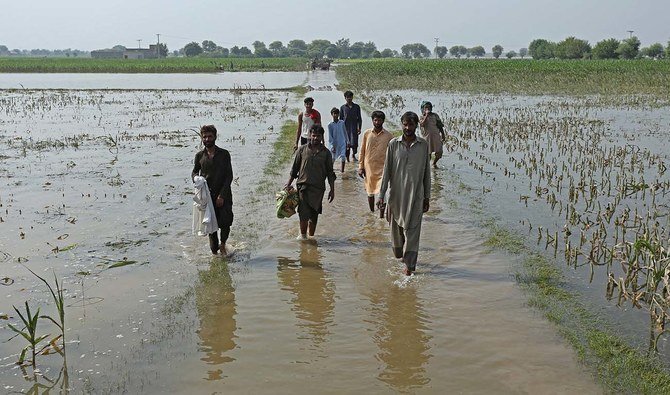
The briefing stated that during the 2025 flood season, rescue teams successfully evacuated around three million people and 2.5 million livestock, while comprehensive compensation was provided to affected communities following detailed damage assessments.
Authorities informed the meeting that flood protection infrastructure across Punjab has largely been restored, while mapping of vulnerable embankments and irrigation systems has been completed. Work on the Jalalpur Flood Protection Bund is expected to be completed by July 31, alongside rehabilitation of other key flood protection structures.
Officials also said modern water rescue drones, advanced navigation equipment and upgraded emergency response technologies have been added to Rescue 1122, significantly enhancing its operational capacity.
The NDMA chairman briefed participants on potential monsoon risks, warning that above-normal rainfall, cloudbursts, flash floods and riverine flooding remain possible in several parts of Punjab. Sensitive districts, particularly in Potohar, Chakwal, Talagang, southern Punjab, Dera Ghazi Khan, Multan, Mandi Bahauddin and Sargodha, have already been identified for enhanced monitoring.
The meeting was also informed that accelerated glacier melt and heavy rainfall in northern Pakistan could increase downstream flood risks, while any unusual water releases into the Chenab, Ravi and Sutlej rivers could further aggravate the flood situation.
Officials said alert systems have already been activated across climate-vulnerable districts, emergency responders remain on standby, and desilting of drains and waterways is underway to reduce urban flooding risks during the monsoon season.
The meeting concluded with a commitment from both the federal and Punjab governments to strengthen institutional coordination, improve climate preparedness and enhance disaster resilience to better protect lives, infrastructure and livelihoods from the growing impacts of climate change.