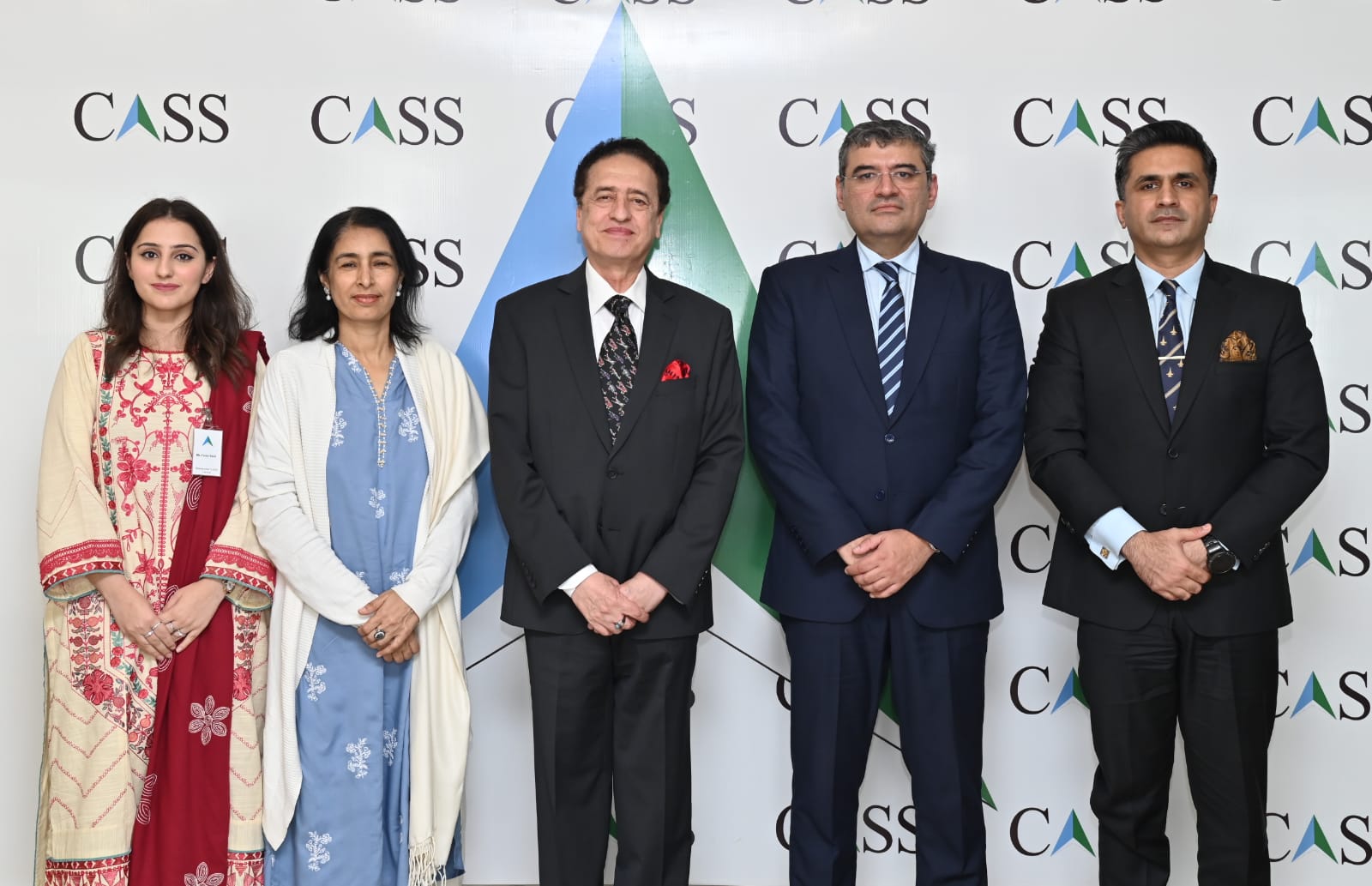
LAHORE — The Centre for Aerospace and Security Studies (CASS), Lahore, hosted a roundtable discussion to examine how artificial intelligence and algorithm-driven technologies are shaping the lives, learning patterns and psychological development of children and young people.
Titled “Growing Up with Algorithms: How AI Is Rewiring Childhood and Youth,” the discussion brought together academics and subject experts to explore the implications of AI at the intersection of technology, education and society. The event opened with remarks by Faiza Abid, Research Assistant at CASS Lahore.

During the first session, Dr Ibrar Hussain, Dean of Information Technology at the University of Lahore, spoke on the expanding role of algorithms in children’s learning and recreational environments. He highlighted the increasing use of adaptive classrooms, smart toys, AI-powered games and digital simulations that blend learning and play across home and school settings.
Dr Hussain also drew attention to potential challenges, including risks to data privacy, cognitive development and essential skill-building. He cautioned that unchecked reliance on algorithmic systems could lead to dependency and heightened surveillance, stressing the need for secure and responsible AI design to protect children’s psychosocial well-being.
In the second session, Dr Shazia Hasan, Professor of Psychology at the University of Central Punjab, discussed how algorithmic environments are influencing identity formation, decision-making and personal agency. She noted that while AI tools can support learning and cognitive efficiency, excessive dependence may limit introspection, emotional engagement and critical judgement, particularly among young users.
Dr Hasan emphasised that maintaining human agency requires thoughtful interpretation of AI-generated outputs, grounding them within ethical, social and cultural frameworks, and ensuring space for independent thinking and self-awareness.
Concluding the discussion, Air Marshal Asim Suleiman (retd), President of CASS Lahore, said artificial intelligence has become deeply embedded in everyday life through digital platforms, gaming and social media. While acknowledging AI’s potential to enhance creativity, personalised learning and problem-solving, he warned that it may also erode independence, resilience and privacy if left unguided.
He underscored the role of families, educators and policymakers in steering the ethical use of AI, supported by research, policy frameworks and human-centred collaboration, to ensure healthy development among children and youth.
The roundtable ended with an interactive exchange, with participants highlighting the long-term implications of artificial intelligence for education, youth development and broader society.