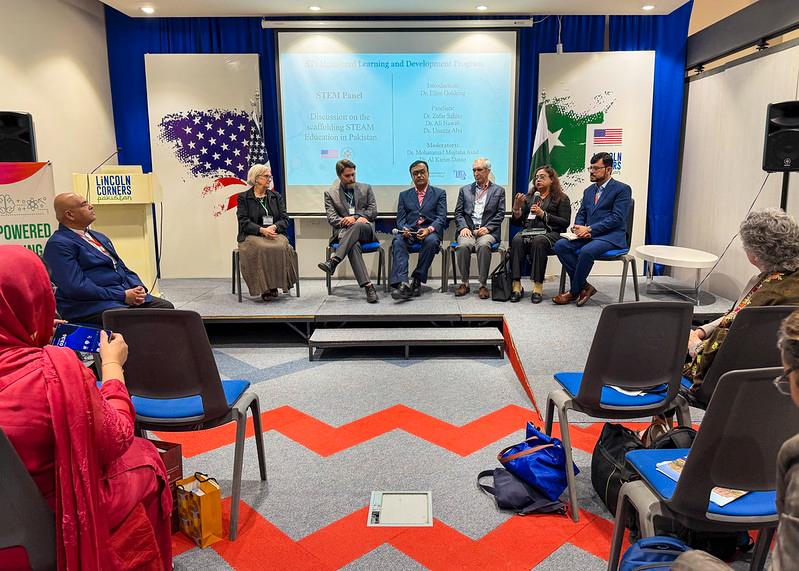
KARACHI: A collaborative project between the U.S. Mission in Pakistan and Vanderbilt University has concluded with the completion of a multi-year initiative aimed at strengthening STEM education in Pakistan, officials said on December 19.
STEM education project supported by U.S. Mission

The initiative, titled STEMpowered, was implemented with a budget of $294,000 and focused on improving teaching practices in science, technology, engineering, and mathematics. The project was carried out in partnership with Sukkur IBA University (SIBA) and Beyond the Classroom Education.
Faculty training held at Vanderbilt University
As part of the program, faculty members from Sukkur IBA University participated in a week-long immersion at Vanderbilt University in Tennessee. The sessions focused on STEM teaching methodologies, research practices, the use of artificial intelligence in education, and addressing classroom-level challenges.
Workshop brings Pakistani educators together
To conclude the project, the U.S. Consulate General in Karachi hosted a four-day workshop in collaboration with Vanderbilt University’s Peabody College of Education and Human Development. The workshop brought together 30 Pakistani STEM educators, four faculty members from Peabody College, 11 faculty members from SIBA, and 16 students.
Participants engaged in interactive discussions, presentations, and collaborative activities aimed at improving teaching approaches and strengthening professional networks among institutions.
Tools developed for wider application
According to organizers, participants developed a STEM Toolkit and a Curriculum Quality Assurance Framework during the program. These resources are intended to support the broader adoption of structured STEM education practices across educational institutions in Pakistan.
Pilot study conducted in Sindh classrooms
The project also included a pilot study conducted in selected classrooms in Sindh. Officials reported that the use of inquiry-based, low-cost teaching methods led to increased student confidence in conducting STEM experiments. The study also recorded higher participation and leadership among female students following the introduction of context-based teaching approaches.
Scope for continued collaboration
Officials said the initiative reflects ongoing educational cooperation between Pakistani institutions and U.S. universities, with a focus on strengthening STEM education through faculty development, curriculum improvement, and classroom innovation.
Read related news here: https://greenpost.com.pk/pakistan/